
Client Retention for Salons and Beauty Clinics: 7 Strategies That Work
Author
DINGGDate Published
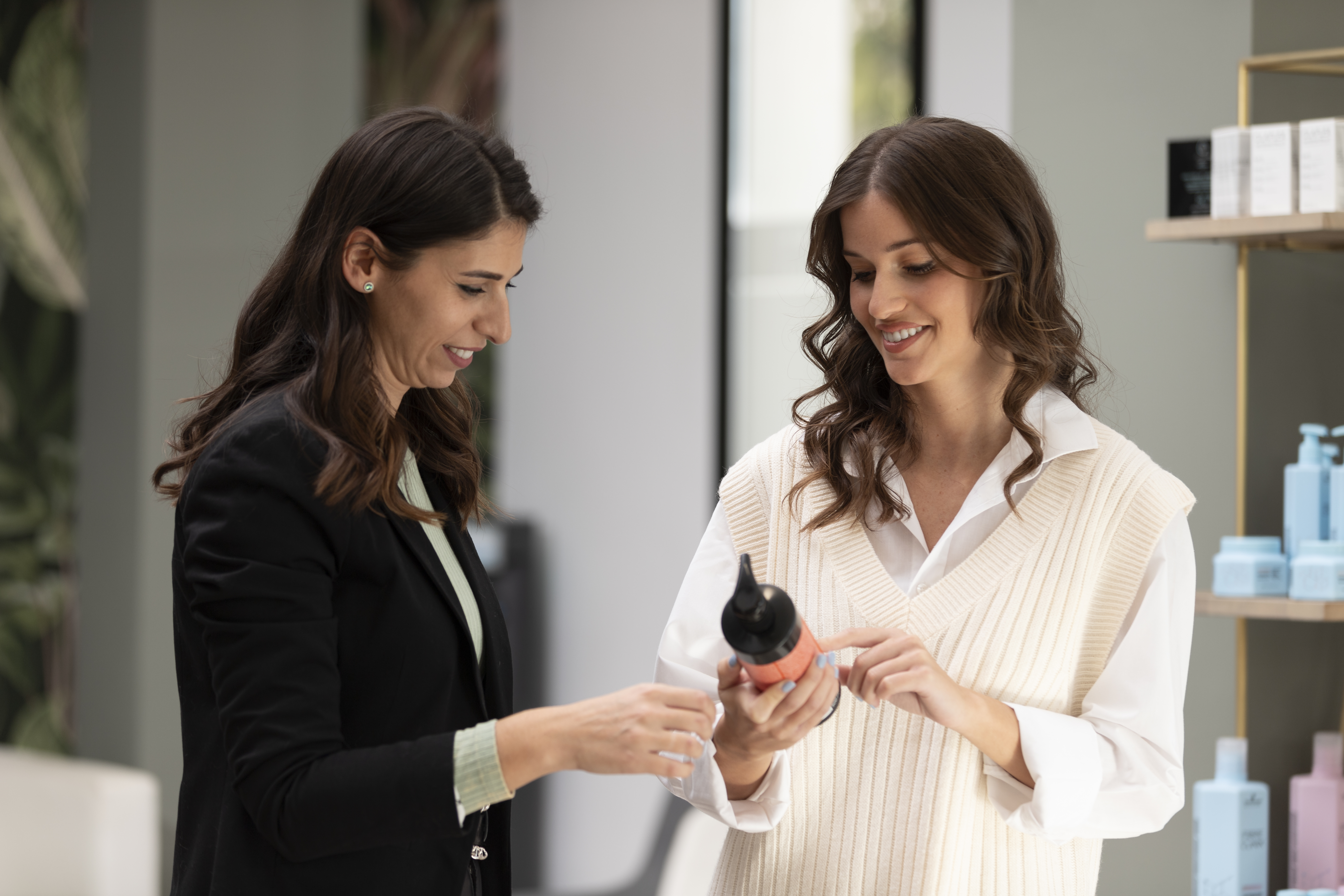
Client retention is the single most important metric for salon and beauty clinic profitability. New client acquisition costs between 5 and 10 times more than retaining an existing client. A salon that loses 30% of its clients each year must replace those clients just to maintain revenue at current levels — before any growth is possible. A salon that retains 75% of its clients compounds its revenue base each year without proportional increase in marketing spend.
This guide covers the specific client retention strategies that work for salons and beauty clinics, what drives clients to leave, and how online booking and automated follow-up change the retention equation.
Why Clients Leave Salons: The Real Reasons
Exit data from salon client surveys consistently produces the same findings. Clients do not leave primarily because of price increases or a single bad experience. They leave because:
- They felt like a transaction, not a relationship — the salon did not know or remember their preferences
- Booking was inconvenient — long wait times on phone, inability to book outside business hours, difficulty seeing real-time availability
- They were not proactively reminded or invited back — life got busy and they never thought to rebook
- A key staff member left and no one introduced them to an alternative stylist they could trust
- The salon did not communicate anything between visits — no offers, no seasonal updates, no acknowledgment of their history
The good news: every one of these is an operational problem with a systemic solution, not a service quality problem that requires fundamental change.
Client Retention for Salons: The 7 Core Strategies
1. Capture Preferences at Every Visit
A client who is asked 'how do you want it today?' every visit experiences no relationship — they are starting from zero each appointment. A client who arrives and is greeted with 'we have your usual highlights and gloss on the schedule, and I remember you mentioned last time you wanted to try a slightly warmer tone — want to discuss that?' experiences a relationship worth maintaining.
The infrastructure for this is simple: a client notes field in the booking system. After every appointment, the treating staff member adds a brief note on what was done, any preferences expressed, and anything mentioned for next time. The next appointment attendant reads the note before the client arrives. This takes 30 seconds and is the most powerful retention tool available.
2. Rebook Before the Client Leaves the Chair
The rebooking rate at chair is the single highest-leverage retention metric a salon can track. A client who leaves without a next appointment has a retention rate of approximately 50 to 60%. A client who leaves with a confirmed next appointment has a retention rate of 85 to 90%. The rebooking moment — while the client is still in the chair, just finished, seeing the result — is when motivation to return is highest.
Train every stylist to make rebooking a natural part of the service close: 'Your colour will look freshest if we see you in 6 to 8 weeks. I have [date] and [date] available — want to grab one before you leave so it's done?' A specific offer with specific dates converts. 'You should come back soon' does not.
3. Automate Follow-Up Between Visits
A client retention gap that can be closed entirely with automation: the silence between visits. Clients who hear nothing from a salon between appointments are passively drifting — busy with life, not reminded that they are overdue, not feeling a pull to rebook. Automated messages close this gap without any manual effort from salon staff.
Post-visit thank you: A message 24 to 48 hours after the appointment — 'Thank you for visiting yesterday. We hope you love your [service]. If you have any questions about maintaining your [colour/treatment/style], we're here.' This message reduces buyer's remorse, opens a communication channel, and implicitly signals that the salon cares about the result beyond the payment.
Rebooking reminder: Sent at the interval appropriate for the service — 5 weeks after a cut, 7 weeks after highlights, 3 weeks after a brow treatment. 'Hi [Name], it's been [X] weeks since your last visit with [Stylist]. Your [service] is probably due for a refresh — [Stylist] has openings on [date] and [date]. Would you like to secure one?' Personalized, specific, actionable.
Lapsed client reactivation: For clients who have not visited in longer than their typical interval plus 4 weeks, a dedicated reactivation message. 'We miss you at [Salon]. It's been a while since your last visit — we'd love to have you back. As a returning client, here's [offer].' The offer converts lapsed clients who needed a prompt but not those who have actively switched salons.
4. Leverage Online Booking for Client Retention
Beauty and wellness salon client retention through online booking works because booking friction is one of the primary reasons clients do not rebook. A client who cannot book online during their lunch break, who has to call and wait on hold, or who cannot see real-time availability is a client who does not rebook.
Online booking that retains clients has these characteristics:
- Available 24/7 with real-time availability — not a request form that takes 24 hours to confirm
- Remembers the client's preferred staff member and service history — not starting from scratch each time
- Sends automated reminders 48 hours and 1 hour before the appointment — reducing no-shows from 15-20% to under 5%
- Allows easy rescheduling and cancellation online — removing the barrier of calling to change an appointment
- Prompts the client to rebook at the appropriate interval after their appointment
Each of these features reduces the friction that causes clients to not return, not book elsewhere — just to not book at all.
5. Build a Memorable Service Experience
Technical skill is the entry requirement for client retention, not the driver. A salon that delivers technically excellent results but an impersonal experience retains clients at a lower rate than one that combines good technique with a deliberate client experience. The experience elements that drive retention:
- Using the client's name throughout the visit, not just at greeting
- Remembering personal details mentioned in previous visits (a promotion, a trip, a family event)
- Explaining what you are doing during service and why — clients who understand the process trust the result and feel like participants rather than subjects
- Making product recommendations specific to the client's actual hair or skin, not generic
- Ending every service with a clear summary of what was done and specific home maintenance instructions
6. Create a Loyalty Program That Rewards Return Visits
A salon loyalty program that rewards visit frequency increases retention by making each visit a step toward a goal. Points-based systems (earn points per visit, redeem for services or products) are the most common structure. The key design principle: the reward should be achievable within 6 to 8 visits. A client who earns a free blowdry after 8 visits has a concrete, reachable goal that anchors their relationship with the salon. A program where the reward requires 25 visits provides no near-term motivation.
Loyalty programs in salon management software track points automatically and display the client's progress at checkout. Clients who can see 'you are 2 visits away from a free treatment' have a tangible reason to rebook that they would not have otherwise.
7. Handle Staff Turnover as a Retention Risk
The most significant unmanaged retention risk in salons is staff departure. When a popular stylist leaves, clients who came specifically for that stylist face a choice: find a new stylist within the salon, or leave. Salons that manage this transition actively retain 60 to 70% of those clients. Salons that do nothing retain under 30%.
Active transition management means: contacting each of the departing stylist's regular clients directly (not via a mass email), introducing a specific replacement stylist and their background, and offering a discounted first appointment with the new stylist to reduce the barrier to trying someone new. The personal outreach — not a newsletter — is what converts.
Measuring Client Retention in Your Salon
Client retention rate is calculated as: (clients retained from the prior period / total clients at the start of that period) x 100. For a salon, the period is typically 6 months or 12 months. A client is 'retained' if they visited at least once in the current period and had also visited in the prior period.
The benchmarks: a healthy salon retention rate is 65 to 75%. Top-performing salons with systematic retention processes achieve 80 to 85%. Below 55% indicates a significant retention problem that is costing the salon more in replacement acquisition than an investment in retention systems would cost.
Additional retention metrics worth tracking: average visit frequency (how often does a typical client visit per year), rebooking rate at chair (what percentage of clients rebook before leaving), and lapsed client reactivation rate (of clients who have not visited in 3 months, what percentage respond to a reactivation message).
Frequently Asked Questions
What is the best client retention strategy for a salon?
Rebooking at chair is the single highest-leverage retention action — a client who leaves with a confirmed next appointment has an 85 to 90% chance of returning vs. 50 to 60% for a client who leaves without one. Combined with automated follow-up reminders at the appropriate service interval, capturing client preferences at every visit, and consistent post-visit communication, these four practices form the core of effective salon client retention. Each can be implemented without adding staff time when they are built into salon management software workflows.
How does online booking improve client retention for beauty and wellness salons?
Online booking removes the friction barrier to rebooking. Clients who can book at 10pm on a Sunday when they realize they are overdue, who can see real-time availability and book instantly, and who receive automated reminders before their appointments rebook at significantly higher rates than clients who have to call during business hours and wait for confirmation. Automated post-visit rebooking prompts sent at the client's service interval close the largest single gap in retention: the period of silence after a visit when the client forgets to rebook and drifts to wherever their next search takes them.
What is a good client retention rate for a hair salon?
65 to 75% is considered healthy for a hair salon. Top performers with systematic retention processes reach 80 to 85%. If your retention rate is below 60%, the revenue lost to churned clients likely exceeds the cost of implementing the retention systems (automated messaging, loyalty program, staff training on rebooking) that would close the gap. At 55% retention with a 200-client base, you are losing 90 clients per year and must acquire 90 new clients just to maintain flat revenue — each of whom costs 5 to 10x more to acquire than a retained client.
How do I reactivate lapsed salon clients?
A direct, personal message sent at the point where a client has exceeded their typical service interval by 4 weeks. The message should acknowledge the time lapse, invite them back specifically (not generically), and include a specific incentive that makes returning easy — a complimentary add-on, a loyalty point bonus, or a discount on a specific service. Personalization matters: a reactivation message that mentions the client's name and their last service ('it has been 12 weeks since your balayage with [Stylist]') converts at 2 to 3 times the rate of a generic mass campaign. Salon management software that identifies lapsed clients automatically and triggers a reactivation sequence removes the manual effort of this process.