
How Your 'Big Wedding Discount' Makes People Think You're a Low-Cost Salon
Author
DINGGDate Published
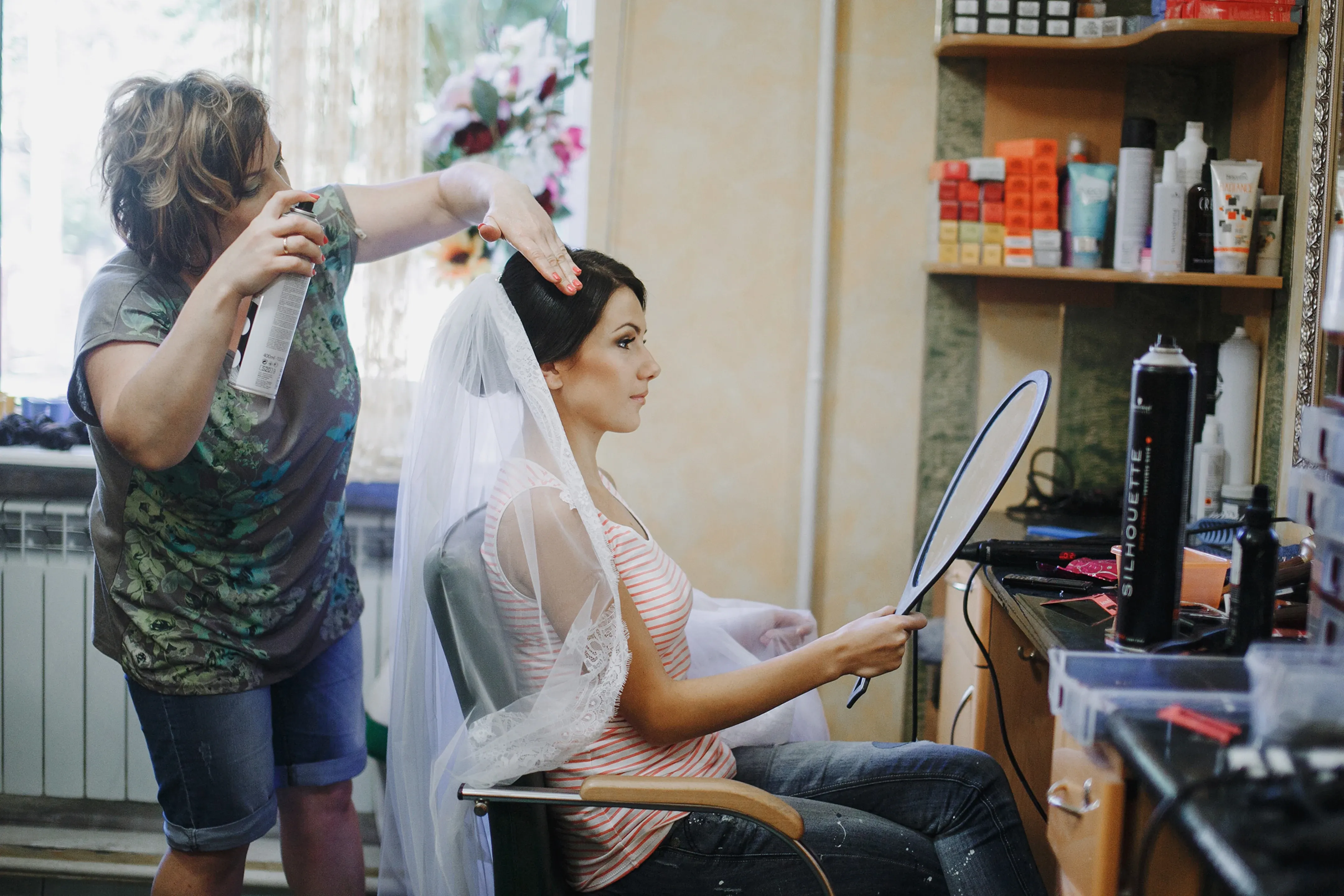
I'll never forget the moment I realized I'd accidentally trained my entire client base to see my salon as "the discount place."
It was a Tuesday morning, and I was staring at my appointment book—completely full for the next three weeks—thinking I should be thrilled. Instead, I felt this knot in my stomach. Want to know why? Because nearly every single booking had come through one of my "special promotions." The bridal party that booked six updos? They'd waited for my 40% off wedding package. The color correction client? She'd held off until my "Spring Savings Event." Even my regular cut-and-style appointments had slowed to a trickle between promotions.
The real gut-punch came when a bride-to-be called and said—I kid you not—"I love your work, but I'm going to wait until you run another big sale. You always do, right?"
That's when it hit me. My "strategy" to attract high-end bridal clients with massive discounts had backfired spectacularly. I wasn't building a premium salon brand. I was accidentally positioning myself as the bargain option—the place you only book when there's a deal.
If you've been offering big wedding discounts thinking it'll establish you as the go-to salon for brides and attract a better clientele, I need to share something important with you: it's doing the exact opposite. And I learned this the hard way, watching my pricing power and brand perception erode month after month.
In this guide, I'm going to walk you through exactly why big discounts damage your salon's perceived value, how they attract the wrong clients, and—most importantly—what actually works to book premium bridal clients at prices that reflect your true worth. Because you deserve to charge what you're worth without constantly slashing your rates to fill your chair.
Why Does a Low Price Make Your Luxury Bridal Services Look Cheap and Bad?
Here's the uncomfortable truth: when you offer a steep discount on your bridal services, potential clients don't think "what a great deal!" They think "why is this so cheap? What's wrong with it?"
Think about it from a bride's perspective for a second. This is literally one of the most photographed days of her life. Every single angle will be captured, posted, shared, and preserved in albums she'll look at for decades. She's already spending thousands on the dress, the venue, the photographer. And then she sees your bridal updo—normally $200—offered for $99.
What goes through her mind?
She's not thinking "amazing value!" She's thinking "why is this half price? Are they desperate for bookings? Is the stylist inexperienced? Do they use cheap products?"
I watched this play out in my own salon countless times. The brides who booked during my big discount periods were the ones who questioned everything—the products I used, how long the style would last, whether I'd done many weddings before. Meanwhile, the brides who booked at full price rarely questioned anything. They'd already decided I was worth it based on my portfolio and reputation.
The Psychology Behind Discount Perception
Research consistently shows that discounts train clients to value price over service quality [2]. It's not their fault—it's basic human psychology. When you consistently offer big discounts, you're literally teaching people that your "regular" price is inflated and negotiable.
Let me paint you a picture. You list your bridal updo at $200. Then you offer it for $120 during your "Summer Wedding Special." What message does that send?
- Your regular price is arbitrary and inflated by 67%
- You're willing to negotiate (so why wouldn't they ask for more discounts?)
- Your services are worth whatever the current promotion says they're worth
- Price matters more than skill, experience, or results
Here's what one of my mentor's told me that completely changed my perspective: "Dawn, when you discount heavily, you're not attracting clients who value your work. You're attracting clients who value a deal. And those are two completely different types of people."
She was right. The discount-seekers were consistently my most challenging clients. They'd show up late, question everything, ask for extras without wanting to pay, and—worst of all—they almost never became regulars or referred others.
The Trust Erosion Factor
Big discounts also erode trust in your pricing structure. If I normally charge $200 for a bridal updo but offer it for $120, my clients are left wondering: "Why should I ever pay full price again?" [3]
I made this mistake for almost two years. I'd run a big wedding promotion every quarter, thinking I was being strategic. What I was actually doing was training my entire client base to wait for sales. My between-promotion bookings dropped by nearly 40%. I was working just as hard but making significantly less money because I'd conditioned everyone to expect a discount.
The really frustrating part? When I finally tried to stop the discount cycle and raise my prices to where they should have been, I faced major resistance. Clients who'd been with me for a year acted like I was personally betraying them by charging what I was actually worth.
What's the Big Difference Between a "Sale" and a "Bonus Gift"?
Okay, so if big discounts are poison for your brand, does that mean you can never offer anything special to attract bridal clients? Not at all. But there's a crucial distinction that most salon owners miss.
A sale lowers the perceived value of your service. A bonus gift or added value increases the perceived value of booking with you.
Let me break this down with a real example from my own salon transformation.
The Old Way (That Hurt My Brand):
"Bridal Updo Special! Regularly $200, now only $120! Book your wedding party and save 40%!"
What this communicated:
- My service is actually only worth $120
- I'm desperate for bookings
- Price is my main selling point
- My regular clients are overpaying
The New Way (That Built My Brand):
"Book Your Bridal Party: Complimentary Luxury Scalp Treatment & Take-Home Touch-Up Kit ($85 value)"
What this communicates:
- My services command premium prices for a reason
- I go above and beyond for bridal clients
- You're getting extra value, not a cheaper version
- I'm confident in my worth
See the difference? In the second version, I'm not lowering my price—I'm enhancing the experience. The bride pays my full rate but receives additional services and products that make the investment even more worthwhile.
Here's what's fascinating: when I made this shift, my bridal bookings actually increased, even though clients were paying more. Why? Because luxury brides aren't primarily shopping on price. They're shopping on confidence, experience, and the assurance that they'll look absolutely stunning.
How Value-Adds Work Better Than Discounts
Instead of slashing your bridal updo from $200 to $120 (a $80 discount), try this approach:
Keep your price at $200 and add:
- A luxurious pre-wedding scalp treatment ($35 value)
- Professional touch-up kit with bobby pins, hairspray, and a mini comb ($25 value)
- Priority booking and a dedicated phone line for day-of emergencies ($? value—this is actually priceless to a stressed bride)
- A complimentary trial run consultation (if you don't already include this)
Total perceived value? Way more than $200. But you're not training clients to see your work as "cheap." You're reinforcing that booking with you is a premium experience worth every penny [2][4].
I started doing this three years ago, and it completely transformed my bridal business. My average bridal booking went from $380 (with discounts) to $650 (with value-adds and no discounts). And the quality of my clients improved dramatically.
The Care Package Approach
One of my most successful strategies has been creating "Bridal Care Packages" at different price points. Instead of discounting my services, I bundle them with retail products and extras:
The Classic Bridal Package - $450
- Bridal updo or styling
- Pre-wedding conditioning treatment
- Touch-up kit with professional products
- Priority scheduling
The Luxury Bridal Experience - $750
- Everything in Classic, plus:
- Trial run session
- Customized hair care plan for the month before your wedding
- Dedicated day-of phone support
- Complimentary mother-of-the-bride or maid-of-honor blow-out
The Complete Bridal Party Package - Custom Pricing
- Customized services for bride and entire party
- On-location services available
- Full day-of coordination
- Personalized gift for the bride
Notice what I'm NOT doing? Lowering my prices. Instead, I'm creating clear tiers that let brides choose based on their needs and budget while maintaining my brand as a premium service [5].
The brides who book the Luxury Experience package? They're my absolute dream clients. They value expertise, they trust my recommendations, and they refer their friends—at full price.
How Can You Make Your Packages Sound So Amazing That Nobody Asks for a Discount?
This is where most salon owners get stuck. You know you shouldn't discount, but how do you justify premium pricing when the salon down the street is offering bridal packages for half your rate?
The answer is in how you communicate value. And honestly, this was the hardest part for me to learn because I'm a hairstylist, not a marketing expert. But after years of trial and error (and watching what worked for other successful salons), I figured out some principles that actually work.
Focus on Outcomes, Not Services
Here's a mistake I made for years: I'd describe my bridal services by listing what I do.
"Bridal updo includes: consultation, styling, pins, hairspray, and up to one hour of service."
Boring, right? And it sounds exactly like what every other salon offers.
Now here's how I describe the same service:
"Your wedding day hair will stay flawless from the moment you say 'I do' through your last dance—guaranteed. We'll create a custom style that photographs beautifully from every angle, withstands hugs from 100 guests, and still looks fresh for your send-off twelve hours later. Plus, you'll have a dedicated phone line to me on your wedding day, so if anything needs a quick touch-up, I'm just a call away."
See the difference? The second version paints a picture of the outcome—the peace of mind, the lasting results, the support. That's what brides actually care about.
Tell Stories, Not Specifications
Nobody gets excited about "professional-grade styling products" or "advanced updo techniques." But they do get excited about stories.
I keep a collection of testimonials and photos from real brides, and I share their stories when talking to potential clients:
"Last month, I worked with Sarah, who was getting married at an outdoor vineyard in July—so we're talking heat, humidity, and a full day in the sun. We designed a romantic updo with soft tendrils that stayed absolutely perfect through the ceremony, photos in the vineyard, and eight hours of dancing. Her maid of honor sent me a message at 11 PM with a photo saying 'HOW is her hair still perfect?!' That's the level of expertise and product quality you're getting."
Stories like this do two things: they demonstrate your expertise without bragging, and they help the bride envision her own successful wedding day experience.
Create Signature Services
One of the best pieces of advice I ever received came from salon consultant Lori Crete: "Identify your signature offering, place it at the top of the menu, and charge at least 30-50% more for this service" [1].
For me, that signature service became "The Heirloom Bridal Style"—a completely customized updo inspired by vintage photographs the bride brings me (often of her grandmother or mother on their wedding day). I charge $350 for this service, which is significantly more than my standard bridal updo at $200.
And you know what? It books constantly. Why? Because it's unique, it's meaningful, and it's positioned as my specialty. Brides don't question the price because they can't get this exact service anywhere else.
Think about what makes your salon unique. Maybe it's:
- Your expertise with specific hair types or textures
- A particular style you've perfected
- Your use of specific high-end products
- Your experience (number of weddings you've done)
- Your specialized training or certifications
Whatever it is, name it, brand it, and charge premium pricing for it.
The Power of Specificity
Vague descriptions invite price comparisons. Specific descriptions create perceived value.
Compare these two descriptions:
Vague: "Bridal hair styling with professional products"
Specific: "Bridal styling using Oribe's Gold Lust collection—the same products used backstage at New York Fashion Week—with a custom blend of three styling products specifically chosen for your hair type, texture, and the weather forecast for your wedding day"
The second version doesn't just sound more premium—it demonstrates a level of expertise and attention to detail that justifies higher pricing.
I started getting really specific in all my bridal consultations. Instead of saying "I'll do an updo," I'd say: "I'm going to create a soft, romantic updo with a slightly off-center base to complement your dress's asymmetrical neckline. We'll incorporate this vintage comb you showed me, and I'll use a combination of techniques—pin curls for the base and braiding for texture—that will hold for 12+ hours without feeling heavy or tight."
That level of specificity makes clients feel confident they're in expert hands. And when people feel confident, they don't negotiate on price.
Why Do the Clients Who Only Care About Discounts Cause You the Biggest Headaches Later?
Let me tell you about "Discount Debbie"—not her real name, but I bet you have a few Debbies of your own.
Debbie booked during my biggest wedding promotion: 50% off all bridal services. She brought a party of eight. On paper, it looked like a huge win—eight services in one day, even at half price, was still decent revenue.
Here's what actually happened:
- Debbie showed up 30 minutes late, throwing off my entire schedule
- She'd brought inspiration photos that were completely different from what we'd discussed in the consultation
- She questioned every product I used: "Is that really necessary? That seems expensive."
- She asked for three style changes mid-appointment
- When her maid of honor decided she wanted something different, Debbie asked if I could "throw that in for free since she's booking so many services"
- After the wedding, she left a three-star review complaining that I "didn't include enough bobby pins in the touch-up kit"
- She never booked with me again
- She never referred anyone
- When I followed up months later offering a post-wedding conditioning treatment, she asked if I had any "deals" running
That one "big booking" ended up being one of my least profitable and most stressful days of the year. And it's not because Debbie was a bad person—it's because I attracted her with the wrong message.
The Price-Sensitive Client Profile
Research from Hello Hair Co found that discounts attract price-sensitive clients who are less likely to return for regular services and more likely to shop around for the next deal [2]. This has been absolutely true in my experience.
Clients who book based primarily on price tend to:
- Question your expertise and recommendations
- Request additional services without wanting to pay
- Arrive late or cancel more frequently
- Leave less generous tips (if any)
- Write reviews focused on price rather than results
- Never become regular clients
- Only return when you're running another promotion
- Refer friends who also only book during sales
Meanwhile, clients who book at full price based on your portfolio and reputation tend to:
- Trust your professional recommendations
- Arrive on time and prepared
- Appreciate the experience and results
- Tip generously
- Leave glowing reviews focused on your skill and service
- Book regular appointments
- Refer friends who also value quality over price
- Become long-term clients worth thousands over the years
I'm not making this up or exaggerating. When I finally analyzed my client data, the numbers were stark. My full-price bridal clients had a 47% rebooking rate for other services. My discount bridal clients? Less than 8%.
The Real Cost of Discount Clients
Let's do some quick math to show you why discount clients actually cost you money in the long run.
Discount Client Scenario:
- Bridal updo at 50% off: $100 (instead of $200)
- Time invested: 2 hours
- Products used: $15
- Rebooking rate: 8%
- Referrals generated: 0.2 per client
- Lifetime value: ~$125
Full-Price Client Scenario:
- Bridal updo at full price: $200
- Time invested: 2 hours
- Products used: $15
- Rebooking rate: 47%
- Referrals generated: 1.8 per client
- Lifetime value: ~$850
The discount client nets you $125 total. The full-price client nets you $850 over time. That's not even accounting for the additional stress, last-minute changes, and service issues that discount clients tend to bring.
When I really understood these numbers, it became so much easier to stop discounting. Every time I was tempted to run a big promotion, I'd remind myself: "This isn't attracting clients. It's attracting headaches that pay poorly."
Breaking the Discount Addiction
If you're already stuck in a discount cycle like I was, getting out isn't easy. Your current clients expect deals, and you might worry that you'll lose bookings if you stop offering them.
Here's how I successfully transitioned away from discounts over about six months:
Month 1-2: Gradually reduced the size of discounts (from 50% to 30%, then to 20%)
Month 3-4: Replaced discount promotions with value-add promotions ("Book now and receive a complimentary gloss treatment" instead of "20% off")
Month 5-6: Eliminated promotions entirely except for occasional value-adds for first-time bridal clients
Yes, I lost some clients during this transition. Specifically, I lost the clients who were never going to be profitable long-term relationships anyway. And you know what? My revenue actually increased because I filled those spots with better clients at better prices.
The transition period was uncomfortable—I won't lie about that. There were weeks where my booking numbers dipped and I second-guessed everything. But I kept reminding myself of salon owner Dawn Clemens' advice: "The best way to increase your prices is to not make a big jump instantly. Start with a 10% raise so that customers don't feel a huge gap" [1].
I started small, stayed consistent, and within six months, my salon had completely transformed.
How Do You Convince People Your Salon Is the "Best" and Not Just the "Cheapest"?
This is the million-dollar question, right? Especially when you're competing with salons that are running constant promotions and undercutting your prices.
The answer isn't to join the race to the bottom. The answer is to position yourself in a completely different category—one where price becomes secondary to value, expertise, and results.
Build Your Authority and Expertise
People pay premium prices to experts, not to the cheapest option. So your job is to consistently demonstrate your expertise in ways that potential clients can see and experience.
Here's what worked for me:
Showcase Your Wedding Portfolio Obsessively I created a dedicated Instagram account just for my bridal work. Every single wedding I do gets featured with multiple angles, lighting conditions, and—crucially—photos from throughout the day showing how the style held up. I ask brides to send me photos from different parts of their wedding day, and I share those with captions like "Still flawless at 10 PM after ceremony, photos, dinner, and three hours of dancing."
This demonstrates results in a way that builds confidence. Brides can see proof that my work lasts.
Share Educational Content I started posting short tips and insights about bridal hair: "Why humidity actually helps certain updo styles," "How to choose a style that complements your face shape and dress neckline," "What to do with your hair the week before your wedding."
This positions me as an expert who understands the nuances of bridal styling. It's not about selling—it's about teaching. And when you teach, people trust you.
Collect and Display Testimonials Strategically I don't just collect generic "great service!" reviews. I ask specific questions that generate detailed testimonials:
- How long did your style last?
- What specifically put your mind at ease?
- What surprised you most about the experience?
- Would you recommend this service to other brides, and why?
These detailed testimonials address the exact concerns that potential clients have and demonstrate value far beyond price.
Highlight Your Specialized Training Every certification, class, or specialized training I complete gets mentioned in my marketing. "Just completed advanced techniques for styling textured and curly hair for brides," or "Trained in vintage bridal styling techniques from the 1920s through 1960s."
This shows I'm invested in my craft and continually improving—worth paying more for.
Create a Premium Experience, Not Just a Premium Service
Here's something I learned from studying high-end salons: luxury isn't just about the end result. It's about the entire experience.
I transformed my bridal consultations from quick 15-minute chats into full 45-minute experiences:
- I serve champagne or specialty coffee
- I have a dedicated bridal consultation area with a mood board and inspiration books
- I ask detailed questions about the venue, dress, theme, and the bride's vision
- I create a custom style plan with sketches and product recommendations
- I take detailed notes and photos
- I send a follow-up email summarizing our plan with personalized tips
This consultation alone makes brides feel valued and special. They're not just another booking—they're receiving customized, expert attention. That experience justifies premium pricing in a way that the actual styling service alone never could.
Communicate Your Value Proposition Clearly
One mistake I made for years was assuming people understood what made my salon different. They didn't. I had to explicitly tell them.
I rewrote all my bridal service descriptions to clearly communicate my unique value:
"With 12 years of exclusive bridal styling experience and over 300 weddings, I specialize in creating styles that photograph beautifully and last all day—guaranteed. Every bridal service includes a customized consultation, premium product selection, and day-of phone support. You're not just booking a hairstyle; you're booking peace of mind from an expert who's seen it all and knows exactly how to handle any situation."
That's not bragging—it's clearly stating what makes my service worth the investment. And it works. When I started communicating value this clearly, price objections dropped significantly.
Leverage Social Proof and Community
Nothing convinces potential clients better than seeing real brides rave about your work. I created a private Facebook group for past bridal clients where they can share their wedding photos, tag me, and connect with each other.
This group serves multiple purposes:
- It keeps me top-of-mind when these women or their friends need salon services
- It creates a community around my brand
- It generates constant social proof as members share their experiences
- It provides a source of testimonials and referrals
I also participate actively in local wedding vendor communities, collaborate with photographers and planners, and ask to be featured in their marketing. This builds credibility and positions me as a trusted expert within the wedding industry.
Know When to Walk Away
Here's a hard truth I had to learn: not every potential client is your ideal client. And that's okay.
When a bride contacts me and her first question is "what's your cheapest bridal package?" or "do you price match?" I know she's probably not a good fit. I'm polite and professional, but I don't bend over backward trying to win her business with discounts.
Instead, I might say: "I focus on premium bridal styling for brides who value expertise and guaranteed results. My services start at $200 for a bridal updo. If you're looking for something more budget-friendly, I'd be happy to refer you to a few talented newer stylists who offer great work at lower price points."
This does two things: it reinforces my positioning as a premium service, and it actually builds respect. Brides appreciate the honesty and clarity, and sometimes they come back later saying "You know what, I thought about it and I really want the peace of mind of working with someone experienced."
The ones who don't come back? They weren't going to be great clients anyway.
What Are the Three Easy Ways to Make Your Service Look Ten Times More Expensive (Without Spending Money)?
Okay, so you're convinced that discounting is hurting your brand. But you don't have a huge budget to invest in fancy renovations or expensive marketing. I get it—I was there too.
The good news? Some of the most effective ways to elevate your perceived value cost almost nothing. They just require thoughtfulness and attention to detail.
1. Upgrade Your Service Descriptions and Presentation
The way you describe and present your services has an enormous impact on perceived value. And this costs exactly zero dollars to improve.
Before: "Bridal Updo - $200"
After: "The Signature Bridal Updo Experience - $200 A completely customized updo designed exclusively for you, your dress, and your wedding vision. Includes personal consultation, premium Oribe product application, style that lasts 12+ hours guaranteed, and day-of phone support for total peace of mind."
See how the second version creates a completely different perception? It's the same service, same price, but it sounds—and feels—premium.
I went through every single service description on my website and in my salon menu and rewrote them with this level of detail and benefit-focused language. It took me one afternoon and cost nothing, but it immediately elevated how clients perceived my services.
Pro tip: Use sensory language and specific details. Instead of "hair treatment," try "restorative Kerastase treatment that leaves your hair silky-smooth and noticeably healthier." Instead of "styling products," try "hand-selected professional products chosen specifically for your hair type and the day's weather conditions."
2. Perfect Your Consultation and Communication Process
The consultation is where you establish value long before you ever touch your client's hair. This is your opportunity to demonstrate expertise, build trust, and justify your pricing.
Here's what I changed in my consultation process that made a huge difference:
I stopped rushing. Instead of squeezing consultations between appointments, I blocked dedicated time for each bridal consultation. This immediately made brides feel valued and important.
I started taking detailed notes. I use a beautiful branded consultation form where I document everything: hair texture, face shape, dress details, venue information, inspiration photos, concerns, and our agreed-upon style plan. I give them a copy and keep one for my files.
I became more prescriptive. Instead of asking "what do you want?" I'd say "Based on your face shape, dress neckline, and the outdoor venue, here's what I recommend and why..." This positions me as the expert guiding them, not just executing their vision.
I set clear expectations. I explain exactly what will happen on the wedding day, how long it will take, what they need to do to prepare, and what results they can expect. This eliminates uncertainty and builds confidence.
I follow up professionally. After every consultation, I send a detailed email summarizing our plan, including inspiration photos and any prep instructions. This level of professionalism reinforces that I'm worth premium pricing.
None of this costs money. It just requires intention and process.
3. Elevate Your Atmosphere and Presentation
You don't need a complete salon renovation to create a more luxurious atmosphere. Small, thoughtful touches make a surprisingly big difference.
Here's what I did with almost no budget:
Improved lighting: I replaced harsh overhead lights with softer, warmer lighting in my styling areas. Better lighting = better photos = happier brides. This cost about $60 in new bulbs.
Added small luxury touches: Fresh flowers on the reception desk (from the grocery store, $10/week), nice hand soap and lotion in the restroom, filtered water with lemon and cucumber in a glass dispenser, real ceramic mugs instead of paper cups. These small details create a premium feel.
Upgraded my tools and their presentation: I invested in a nice set of professional brushes and combs, and I keep them displayed beautifully instead of thrown in a drawer. Clients notice and appreciate seeing high-quality tools.
Created a dedicated bridal area: I designated one styling station specifically for bridal services and decorated it slightly differently—softer colors, better mirror, inspiration photos on the wall, a small shelf with premium products displayed. This makes bridal clients feel special.
Improved my personal presentation: I started wearing all black when working with brides (looks more professional in photos), invested in a nice apron with my logo, and made sure my own hair and makeup always looked polished. If I'm asking brides to trust me with their wedding day look, I need to look like an expert.
Professional photography: I hired a photographer friend to take proper photos of my work instead of relying on my iPhone. High-quality images instantly elevate perceived value. This was my biggest investment at $300, but it paid for itself many times over.
The total cost of all these improvements? Less than $500. But the impact on how clients perceived my salon's value? Enormous.
So, What Exactly Is the Problem with Big Wedding Discounts?
Let me bring this all together with a clear, direct answer to the core question.
Big wedding discounts damage your salon's brand by signaling to potential clients that your services aren't actually worth your regular prices. When you offer steep discounts—especially for premium services like bridal styling—you're training clients to see you as a budget option rather than a quality expert. This attracts price-sensitive clients who are less loyal, more demanding, and less likely to generate long-term revenue or valuable referrals [2][3].
The real problem isn't just the immediate loss of revenue from discounting. It's the long-term erosion of your pricing power and brand positioning. Once clients see you as "the discount salon," it becomes incredibly difficult to raise prices or attract premium clients who value expertise over price.
Instead of discounting, successful salon owners focus on adding value, communicating expertise, creating premium experiences, and attracting clients who appreciate quality. These strategies build long-term business value instead of creating a race-to-the-bottom pricing spiral.
How Does Offering Big Wedding Discounts Actually Affect Your Business in Practice?
Let me share the real-world impact I experienced and that I've seen in countless other salons.
The Immediate Effects
When you start offering big wedding discounts, you'll probably see an initial spike in bookings. This feels great at first—your calendar fills up, you're busy, and you think you've found a winning strategy.
But look closer at what's actually happening:
Your profit margins shrink dramatically. A bridal updo that should net you $185 (after product costs) is now netting you $85. You're working the same hours for less than half the profit.
You attract bargain hunters, not quality clients. The brides booking your 50%-off special aren't choosing you because they love your work—they're choosing you because you're cheap. There's a big difference.
Your regular-price bookings slow down. Why would anyone pay full price when they know you regularly offer huge discounts? I watched my between-promotion bookings drop by 40% once clients learned to wait for sales.
The Long-Term Damage
The real problems emerge over time:
You can't raise prices without major pushback. Once you've established yourself as the discount option, trying to position yourself as premium feels inauthentic and confusing to clients.
Your brand reputation suffers. Other wedding vendors start seeing you as the "cheap option" and stop referring high-end clients to you. I experienced this firsthand—I noticed I was no longer getting referrals from premium photographers and planners.
You attract competitors who undercut you. When you compete on price, there's always someone willing to go lower. I watched two new salons open near me and immediately start offering even steeper discounts, trying to undercut my already-discounted prices.
Your client lifetime value plummets. Research shows that discount clients have dramatically lower rebooking rates and generate fewer referrals [2]. My own data confirmed this: discount bridal clients had a lifetime value of about $125, while full-price clients averaged $850.
You burn out faster. Working harder for less money while dealing with more demanding clients is a recipe for burnout. I was busier than ever but less profitable and way more stressed.
The Breaking Point
For me, the breaking point came about 18 months into my discount strategy. I was completely booked, working six days a week, and somehow making less money than I had two years earlier. I was exhausted, frustrated, and feeling trapped.
That's when I realized: I hadn't built a sustainable business model. I'd built a hamster wheel where I had to run faster and faster just to stay in place.
The path out wasn't easy, but it was necessary. And every salon owner I know who's successfully built a premium brand has had to make the same shift: from competing on price to competing on value.
What Are the Main Benefits and Drawbacks of Different Pricing Strategies?
Let me break down the real pros and cons of various approaches, based on both my experience and what I've learned from other salon owners.
The Discount Strategy
Potential Benefits:
- Quick calendar filling (short-term booking boost)
- Attracts new clients who might not have tried you otherwise
- Creates urgency and drives immediate action
- Easy to implement and market
Significant Drawbacks:
- Attracts price-sensitive clients with low loyalty [2]
- Erodes perceived value and brand positioning [3]
- Creates expectation of ongoing discounts
- Reduces profit margins significantly
- Makes it difficult to raise prices later
- Trains clients to value price over quality
- Generates fewer referrals and repeat bookings
- Attracts competitors who undercut you further
- Lower client lifetime value (my data: $125 vs. $850)
Bottom line: The short-term gain isn't worth the long-term damage. I learned this the expensive way.
The Value-Add Strategy
Benefits:
- Maintains your pricing integrity
- Attracts clients who value quality and expertise
- Allows you to showcase premium products and services
- Differentiates you from competitors
- Builds perception of luxury and exclusivity
- Creates opportunities to upsell retail products
- Generates higher client satisfaction
- Easier to maintain long-term
Drawbacks:
- Requires more creativity and planning
- May need some investment in products or extras
- Takes longer to communicate the value proposition
- Might not attract as many bookings initially (but attracts better bookings)
Bottom line: This approach builds sustainable business value. It's what I wish I'd done from the beginning.
The Premium Positioning Strategy
Benefits:
- Attracts ideal clients who value expertise over price
- Allows you to charge what you're actually worth
- Creates strong brand identity and reputation
- Generates high-quality referrals
- Higher profit margins and client lifetime value
- More enjoyable clients to work with
- Sustainable long-term business model
- Positions you as an expert, not a commodity
Drawbacks:
- Requires confidence and commitment
- May initially reduce booking volume (until your reputation builds)
- Requires excellent service delivery to justify pricing
- Need to invest in marketing that communicates value
- Can't rely on price as your main selling point
Bottom line: This is where you want to be. It takes time and intention to get here, but it's worth it.
The Tiered Pricing Strategy
Benefits:
- Offers options for different budgets
- Allows clients to self-select their level of service
- Creates clear upsell opportunities
- Helps you serve a broader market
- Makes pricing feel more transparent and fair [5]
- Allows you to maintain premium options while offering entry points
Drawbacks:
- More complex to communicate and manage
- Risk of most clients choosing the lowest tier
- Need to clearly differentiate tiers to justify price differences
- Requires careful structuring to maintain profitability
Bottom line: This can work well if done thoughtfully, with clear value distinctions between tiers.
When Should You Consider Adjusting Your Pricing Strategy?
Knowing when to change your approach is crucial. Here are the clear signals I've learned to watch for, both from my own experience and from salon consultant Tulio's advice.
Signs It's Time to Raise Your Prices
You're consistently booked out 3-4 weeks in advance with productivity over 80%. This is a clear market signal that demand exceeds your supply at current prices [1]. If you can't accommodate new clients without turning them away or working unsustainable hours, your prices are too low.
I was in this situation for almost a year before I finally raised my rates. I kept thinking "I'm so lucky to be this busy!" But I was actually leaving money on the table and burning myself out.
Your skills and experience have significantly increased. If you've completed advanced training, earned certifications, or accumulated years of specialized experience, your pricing should reflect that growth. Dawn Clemens recommends starting with a 10% increase so clients don't feel shocked [1].
Your operating costs have increased substantially. If your rent, product costs, or other expenses have gone up significantly, you need to raise prices to maintain profitability. This is just basic business math.
You're attracting mostly price-shoppers rather than quality-seekers. If every consultation starts with "what's your cheapest option?" you're positioned too low in the market.
You feel resentful about your pricing. This was a big one for me. If you're consistently feeling like you're not being paid fairly for your expertise and effort, that resentment will affect your service quality and job satisfaction.
Signs You Need to Stop Discounting
Your between-promotion bookings have dropped significantly. If clients are waiting for your next sale rather than booking at regular prices, you've trained them to expect discounts.
You're working harder but making less money. If your calendar is full but your bank account doesn't reflect it, discounting is probably the culprit.
You're attracting challenging clients with high demands and low loyalty. If your discount clients are consistently your most difficult and least loyal, you're attracting the wrong market segment [2].
Other wedding vendors stop referring to you. Premium photographers, planners, and venues won't refer their high-end clients to "the discount salon." If quality referrals have dried up, your positioning might be the problem.
You're embarrassed by your pricing. If you find yourself apologizing for your prices or feeling defensive about them, something's off. Your pricing should make you feel confident and proud.
Signs Your Value Proposition Needs Work
Clients frequently ask "why is this so expensive?" If you're constantly justifying your prices, you're not effectively communicating value upfront.
You struggle to explain what makes your services different. If you can't clearly articulate your unique value in 30 seconds or less, potential clients won't understand it either.
Your marketing focuses on features rather than benefits. If you're listing what you do rather than the results clients get, you're missing the value communication opportunity.
You're getting lots of inquiries but few bookings. This suggests your marketing attracts interest but your value proposition doesn't convert that interest into bookings.
What Mistakes Should You Avoid When Transitioning Away from Discounts?
Changing your pricing strategy isn't as simple as just stopping discounts overnight. I made several mistakes during my transition that you can avoid.
Mistake #1: Making Sudden, Drastic Changes
When I first decided to stop discounting, I went cold turkey. I cancelled my planned promotion and raised prices by 30% all at once.
Big mistake.
My existing clients felt blindsided. My bookings dropped sharply for about six weeks. And I panicked and almost went back to discounting.
Better approach: Gradually transition over several months. Reduce discount percentages incrementally, replace price discounts with value-adds, and give existing clients advance notice of changes. Dawn Clemens' advice about 10% increases is spot-on [1].
Mistake #2: Not Communicating the Change Clearly
I assumed clients would just accept the new pricing without explanation. Wrong.
When you change your pricing strategy, especially if you've been known for discounts, you need to proactively communicate why. I should have sent an email to my client list explaining:
- My commitment to providing the highest quality service
- Investments I've made in training and products
- The enhanced experience clients can now expect
- How the new pricing reflects the true value of my expertise
Better approach: Overcommunicate during transitions. Explain the reasoning, highlight improvements, and help clients understand the value they're receiving.
Mistake #3: Not Improving Your Service to Match Premium Pricing
Simply raising prices without enhancing your service or client experience won't work. Clients need to perceive increased value to justify increased prices.
Before raising prices, I should have:
- Upgraded my consultation process
- Enhanced the client experience with small luxury touches
- Improved my portfolio and marketing materials
- Invested in better product lines
- Refined my service delivery
Better approach: Improve before you raise. Make sure your service quality, client experience, and professional presentation justify your new pricing.
Mistake #4: Giving In to Price Objections Too Quickly
During my transition, whenever a potential client balked at my new prices, I'd immediately offer a discount "just this once." This completely undermined my new positioning.
Every time you give in to price objections, you reinforce that your prices are negotiable and not really worth what you're asking.
Better approach: Stand firm on your pricing. When clients express concern about price, respond by reinforcing value, not by lowering the price. Have a script ready: "I understand budget is a consideration. Let me explain what makes this investment worthwhile..." If they're truly not a good fit, graciously refer them elsewhere rather than discounting.
Mistake #5: Not Having a Clear Value Proposition
I raised my prices without clearly articulating why clients should pay more for my services than for competitors'. That's a recipe for lost bookings.
Better approach: Before changing your pricing, get crystal clear on:
- What makes your service unique and valuable
- The specific results and benefits clients receive
- Why your expertise justifies premium pricing
- How to communicate this value in every client interaction
Mistake #6: Ignoring Your Ideal Client Profile
I tried to be everything to everyone—offering both budget-friendly and premium options, trying to serve both bargain-hunters and luxury clients.
This confused my brand and diluted my positioning.
Better approach: Get clear on your ideal client and design your entire service offering, pricing, and marketing around attracting that specific person. It's okay to let go of clients who aren't a good fit.
Mistake #7: Not Tracking the Right Metrics
I focused only on total bookings and didn't track:
- Average transaction value
- Client lifetime value
- Referral rates by client segment
- Profitability per service
- Rebooking rates
This meant I couldn't see the real impact of my pricing changes—both positive and negative.
Better approach: Track meaningful metrics from the beginning so you can make data-informed decisions about your pricing strategy.
FAQ: Your Burning Questions About Pricing and Discounts
How do I stop offering discounts without losing all my clients?
Transition gradually over 3-6 months by reducing discount percentages, replacing price cuts with value-adds, and improving your service quality. Communicate changes clearly and give existing clients advance notice. Focus on attracting new clients who value quality over price while your existing client base adjusts.
What should I say when a bride asks if I offer wedding discounts?
Respond with confidence: "I don't discount my bridal services because I'm committed to providing the highest level of expertise and guaranteed results. However, I do offer exclusive value-adds for bridal parties, including [list specific benefits]. Let me explain what makes this investment worthwhile..."
How much should I charge for bridal services compared to regular styling?
Bridal services should command premium pricing—typically 30-50% more than comparable regular services [1]. The stakes are higher, the time commitment is greater, and the expertise required is more specialized. Factor in consultation time, trial runs, day-of coordination, and the peace-of-mind value you provide.
Can I still run promotions without devaluing my brand?
Yes, but focus on value-add promotions rather than price discounts. Offer complimentary services, exclusive products, priority booking, or enhanced experiences—never reduce your actual service prices. Frame promotions as "limited-time bonus" rather than "sale" or "discount" [2][4].
What if my competitors are undercutting my prices significantly?
Don't compete on price—compete on value. Differentiate yourself through expertise, specialized services, superior results, and exceptional client experience. Position yourself in a different category entirely. Some clients will always choose the cheapest option; those aren't your ideal clients anyway.
How do I justify premium pricing to budget-conscious brides?
Focus the conversation on outcomes, not costs. Explain the guaranteed results, the expertise behind your work, the peace of mind they're receiving, and the lasting memories they're investing in. Share testimonials from past brides about how their hair looked perfect all day. Help them see it as an investment in confidence and memories, not just a hairstyle.
What's a reasonable profit margin for bridal services?
Aim for 60-70% profit margin after accounting for product costs, time, and overhead. If you're offering a $200 bridal updo, your costs (products, time-based overhead) should be around $60-80, leaving $120-140 in actual profit. If discounting brings you below this, you're not running a sustainable business.
How often should I review and adjust my pricing?
Review your pricing quarterly and make adjustments annually or when significant changes occur (new certifications, increased demand, rising costs). Regular review helps you stay competitive and ensures your pricing reflects your current skill level and market position [3].
Should I charge more for on-location bridal services?
Absolutely. On-location services should include travel time, transportation costs, and the inconvenience premium. Typically, add 30-50% to your in-salon rates for on-location work, plus any travel fees for distances beyond a certain radius.
What if I've already damaged my brand with discounts?
You can rebuild, but it takes time and consistency. Gradually phase out discounts, enhance your service quality and client experience, improve your marketing and portfolio, and be patient as you attract a new client base. It took me about 12 months to fully transition my brand from "discount salon" to "premium expert."
Ready to transform your salon's pricing and positioning? If you're struggling to manage bookings, track client data, and implement the kind of professional systems that support premium pricing, DINGG's salon management software can help you streamline operations, improve client experience, and present the polished, professional image that justifies premium rates. Our all-in-one platform helps salon owners like you save 6-8 hours per week on admin tasks so you can focus on delivering the exceptional service your clients are paying for. Start your free trial today and see how the right systems can support your premium positioning.