Why Indian Salons Are Moving from Manual to Digital Operations
Author
DINGGDate Published

It's 7:45 PM on a Saturday in Indore. The salon's packed, three clients are waiting, and the register book has gone missing behind a stack of towels. A walk-in asks, "Did I have the keratin last time or the smoothening?" The stylist guesses. Guesses wrong. The client doesn't come back.
That scene plays out thousands of times daily across Indian salons. And it's exactly why salon owners—from single-chair setups in Tier 3 towns to multi-location chains in Mumbai—are abandoning manual ledgers for digital operations. Not because "digital is the future" (honestly, that phrase means nothing), but because manual systems are actively bleeding revenue.
Here's what this guide will help you do: Move your salon from paper-based chaos to a working digital system in phases—without overwhelming your staff or wasting money on tools you won't use.
Before You Touch Any Software: The Pre-Flight Check
Don't download a single app until you've answered these:
- Do you know your average monthly no-show count? (If not, you're flying blind.)
- Can your staff describe their biggest daily time-waster in one sentence?
- Do you have a phone number or WhatsApp for at least 60% of your regular clients?
Stop/Go test: If you can't estimate your weekly walk-in vs. appointment ratio within 10%, start tracking that manually for two weeks first—then come back here.
The organised salon market in India is approaching ₹15,000 crore, with 10-15% growth in the premium segment alone. With 1.4 lakh new internet users coming online daily in 2024, your clients' expectations have already shifted. They're booking cabs, ordering food, and scheduling doctor visits on their phones. Your salon is next.
Phase 1: Kill the Appointment Chaos with 24/7 Online Booking
What to do: Set up an online booking system that lets clients self-schedule. This is your single highest-ROI move.
Here's the thing most guides won't tell you—in Tier 2 and Tier 3 cities, app downloads lag badly. WhatsApp-native booking outperforms standalone apps almost every time. Don't fight that. Work with it.
Steps:
- Choose a platform that supports WhatsApp integration alongside a booking link.
- Upload your service menu with accurate durations (not guesses—time 10 actual appointments to get real numbers).
- Enable automated confirmations and no-show reminders via WhatsApp and SMS.
- Share the booking link on your Google Business profile, Instagram bio, and in-store signage.
Visual checkpoint: You should see a green confirmation tick on every booking, and your reminder logs should show "Sent" status next to each upcoming appointment.
Verification: Check 5 recent bookings. If 80% have auto-reminders sent and visible in your logs, you're good. If not, your WhatsApp integration needs reconfiguring.
The friction nobody warns you about: Clients will still call. For the first month, your front desk will run both systems. That's normal. The goal isn't zero calls overnight—it's reducing phone tag by 50% in 60 days. Smart scheduling tools handle the overlap, stacking appointments based on stylist availability and service duration so you stop double-booking chairs.
Phase 2: Build Client History Profiles That Actually Get Used
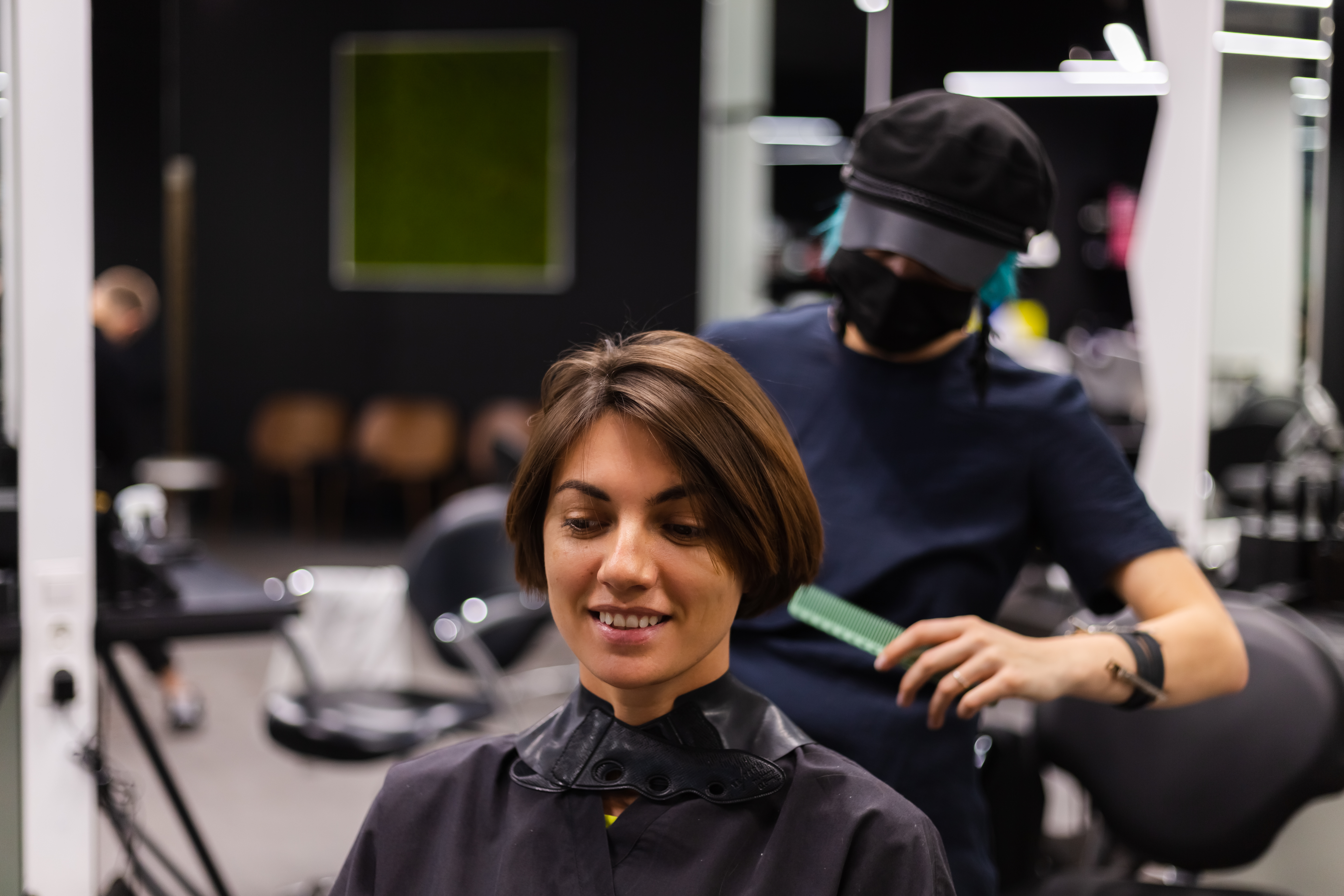
A client walks in. Your stylist pulls up their personalized profile on a tablet: last three visits, preferred stylist, product allergies, colour formula. That's not fancy tech—that's just organized data replacing memory.
Steps:
- Start entering client details at checkout—name, phone, services done, products used.
- Tag clients by visit frequency (weekly, monthly, lapsed).
- Use customer segmentation to group clients by service type and spend level.
- Enable stylists to add notes post-appointment ("Prefers no small talk," "Allergic to ammonia-based colour").
Visual checkpoint: Client profiles should display colour-coded history—something like orange for "recently engaged" clients and grey for lapsed ones.
Verification: Pull up profiles for 10 walk-ins. If 7 or more show past services loaded before the client sits down, your data is clean. If stylists are still asking "What did we do last time?"—you've got dirty data.
This is where hyper-personalization stops being a buzzword and starts being operational. When your CRM knows a client's history, your staff doesn't just deliver a service—they deliver the right service. That's the difference between a ₹500 haircut and a ₹500 haircut that generates a rebooking.
Phase 3: Plug the Revenue Leaks with Inventory Control and Real-Time Reports
Here's a number that should bother you: competition erodes up to 70% of manual salons' local reach. Part of that is visibility. But a huge part is waste—products expiring on shelves, overstocking shampoo nobody asks for, understocking the one serum every bridal client wants in October.
Steps:
- Digitize your product inventory with a barcode or SKU-based system.
- Tie product usage to specific services in your system (e.g., 1 unit of keratin serum per smoothening appointment).
- Set low-stock alerts for your top 20 products.
- Review real-time reports on your phone daily—revenue, product usage, staff productivity.
Visual checkpoint: Your mobile dashboard should show an upward-trending revenue graph with a green "On Track" indicator compared to yesterday's figure. Red flags mean it's time to check staff performance or walk-in volume.
Verification: Scan inventory and compare digital stock levels to a physical count. If they match within 5%, your sync is working. Discrepancies above that point to manual entry errors—the most common ghost issue after going digital.
This also feeds into easy invoices and targeted marketing. When you know which products move and which don't, you stop guessing on reorders. When you know which client segment buys what, you send offers that actually convert instead of blasting generic WhatsApp broadcasts.
Ready to see your revenue leaks in real time? DINGG Salon Software connects your inventory, billing, and client data into one dashboard—built specifically for Indian salons running single or multiple locations. Explore DINGG's real-time reporting tools to see what's working and what's not, before your next billing cycle.
Phase 4: Lock In Repeat Revenue with Loyalty Rewards and Membership Programs
Getting a client once is marketing. Getting them back eight times is systems.
Set up loyalty rewards that auto-update points at checkout. Offer membership programs with prepaid packages (e.g., "4 haircuts + 1 free facial"). Use gift cards for festive seasons—they're underused in Indian salons but drive serious walk-in traffic from new clients brought in by existing ones.
The ugly truth about loyalty: If point balances aren't visible to clients, uptake dies. Don't bury rewards inside an app nobody opens. Broadcast balances via WhatsApp weekly. That single tweak—pushing points instead of waiting for clients to check—can shift your repeat rate noticeably.
Use client feedback and forms & surveys post-visit to catch dissatisfaction before it becomes a Google review. Even a 3-question WhatsApp survey ("Rate your visit 1-5, would you rebook, any suggestions?") gives you data that manual comment cards never captured.
The "Ugly Truth" Table: What Breaks After You Go Digital
Problem
The Weird Fix
Why It Works
No-shows spike after switching to digital booking
Hybrid WhatsApp + SMS reminders with voice notes
Clients in Tier 2/3 ignore app notifications but listen to voice messages
Inventory numbers don't match shelves
Tie product deductions to UPI payment confirmations
Auto-updates at payment eliminate manual entry gaps
Staff resist using digital tools
Run a 1-week ROI demo showing "no stockouts = +20% sales"
Seeing the money makes it real—training alone doesn't stick
Clients ignore loyalty app
Push point balances via WhatsApp broadcasts weekly
Meets clients where they already are instead of asking them to open another app
FAQs
How long before digital tools show ROI for a small Indian salon?
Most owners see booking efficiency gains within 1-2 months. Loyalty program returns and measurable revenue impact from real-time reports typically show up in 3-6 months, depending on client volume and staff adoption speed.
Is salon digitization worth it for a single-location Tier 3 salon?
Yes—if you start with WhatsApp-native booking and a basic CRM instead of a full-suite platform. The key is matching tool complexity to your team's comfort level. Staff management features and multi-location support can come later as you grow.
How do I keep client data secure with digital salon tools?
Choose India-compliant platforms with owner-controlled data export. Start with a free tier to test, then migrate data in batches you control. Avoid tools that lock your client list behind a paywall.
What's the biggest mistake salons make when going digital?
Trying to digitize everything at once. Phase it: booking first, then client profiles, then inventory and loyalty. Each phase needs 4-6 weeks of staff training before layering the next.
The shift from manual to digital isn't about chasing trends. It's about stopping the slow bleed of missed appointments, forgotten client preferences, and invisible inventory waste. The salons growing fastest in India right now aren't the ones with the fanciest interiors—they're the ones where the owner can check today's revenue, tomorrow's bookings, and last month's top client segment from their phone while drinking chai.