
Why Most Indian Salons Struggle With Daily Operations
Author
DINGGDate Published
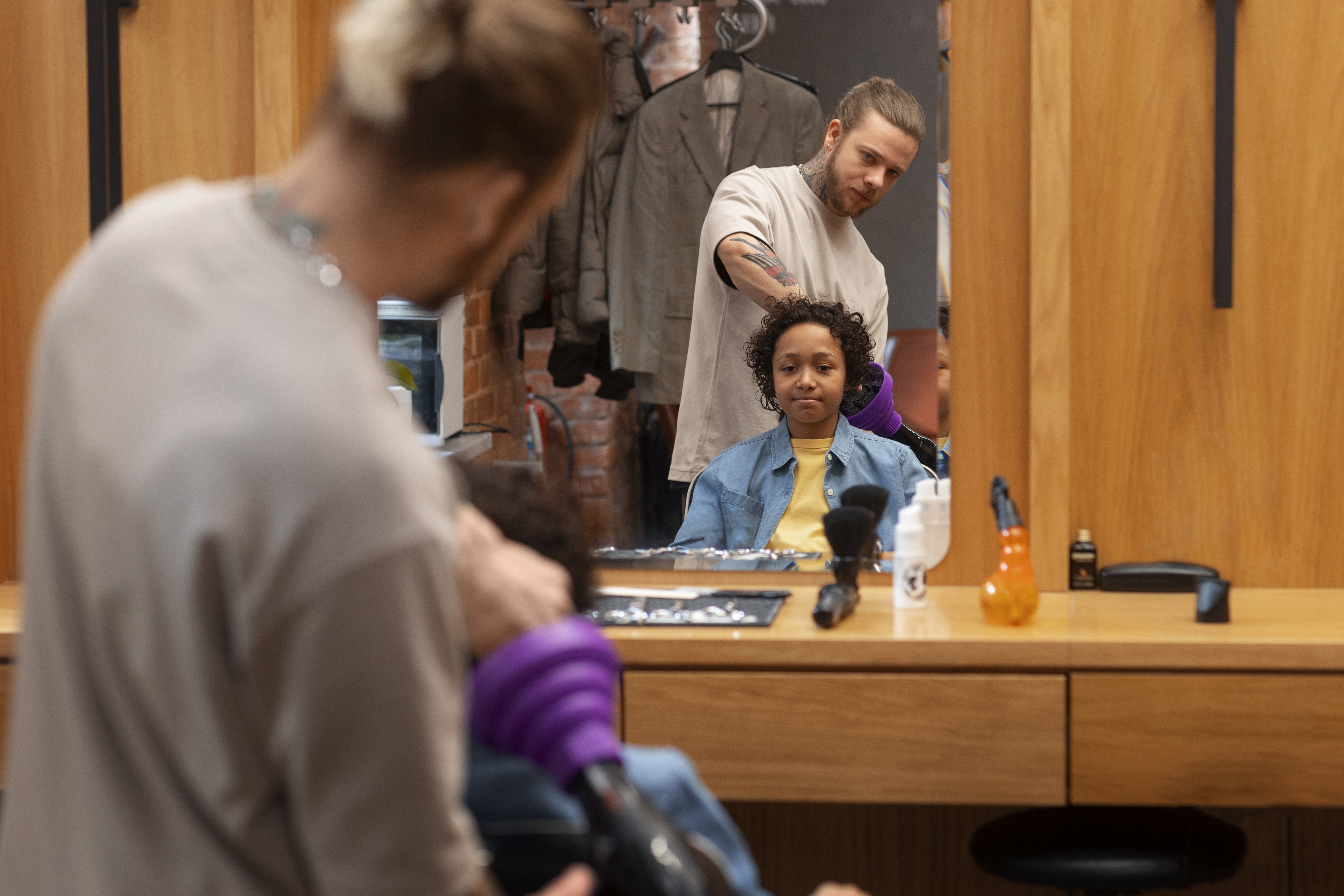
The appointment book says 28 clients today. By 3 PM, only 19 have shown up. Your senior stylist is handling walk-ins on WhatsApp while the booking software you paid ₹3,000 for this month sits unopened on the tablet. A customer asks for her visit history—you're scrambling through a physical register from four months ago. Your inventory count is off again. The GST filing deadline is next week, and you're still reconciling cash payments that never made it into any system.
This is the daily reality for 60% of independent salon owners in India. The industry is growing at 10-15% annually in the premium segment, yet most salon owners are drowning in operational chaos—not because they lack technology, but because the technology they bought doesn't match how their business actually runs.
Here's what you'll walk away with: A clear understanding of the real operational gaps killing your salon's profitability, why generic software fails, and the specific fixes that successful salon owners use to regain control without burning out their staff.
The Pre-Flight Check: Are You Ready to Fix This?
Before we dig into solutions, let's establish baseline honesty. Most salon operational advice assumes you have:
- A team willing to change habits
- 30 days of patience before seeing results
- The ability to enforce new systems when staff resist
Your Stop/Go Test: Can you name your salon's biggest operational leak right now in one sentence? If you said "no-shows," "inventory mess," or "staff still using WhatsApp for bookings"—you're ready. If you answered "everything," we need to narrow the scope first.
You'll also need:
- Access to 30 days of past appointment data (even if it's messy)
- One hour per week for the first month to review system adoption
- Buy-in from at least one senior staff member who will champion the change
If you don't have these three, pause here. The rest of this guide assumes you're past the "maybe I should try something" phase and into the "I need this fixed now" phase.
The Core Struggle: Why Your Salon Operates Like It's Still 2015
The No-Show Black Hole
Indian salons operate with a 25-35% no-show rate. That's not a typo—one in three booked appointments simply doesn't happen. You're losing ₹15,000–₹40,000 monthly to empty chairs that could've been filled if you'd known 24 hours earlier. The root cause isn't "unreliable customers." It's the absence of a proper reminder system in your salon software. When bookings happen via WhatsApp or phone without salon booking software, there's no automated follow-up. The customer forgets. You lose revenue. The cycle repeats. Modern salon booking software like addresses this exact problem with automated reminders. The Verification: Pull your last month's appointment log. Count confirmed bookings vs. actual arrivals. If the gap is above 20%, your reminder system (or lack of one) is costing you real money.
The WhatsApp Reversion Problem
You paid for salon software. Your staff used it for two weeks. By week three, they're back to WhatsApp because "it's faster." This isn't laziness—it's activation friction.
Staff view software as surveillance. They're not wrong. Most salon management systems are built for owner oversight, not staff efficiency. When the stylist has to open an app, log in, navigate three menus to mark a client as "arrived," and then separately update service notes—of course they'll text the client directly instead.
The fix isn't better training. It's better software design. Systems that work integrate with WhatsApp (where your staff already live) rather than replacing it. Automate the tedious parts—appointment confirmations, reminders, payment links—so staff only interact with the system when it saves them time.
Expert Nuance: Revenue per staff member (RPSM) drops 18-22% when stylists spend more than 15 minutes per day on administrative tasks. If your software adds work instead of removing it, you're paying twice—once for the subscription, once in lost productivity.
The Inventory Ghost
You ordered 40 bottles of shampoo last month. Today, you have 11 in stock and no record of where the other 29 went. Some were used for services. Some were sold retail. A few probably walked out the door. Most independent salons track inventory manually—or don't track it at all. When stock runs low, you panic-order at higher prices. When products expire unused, you eat the loss. DINGG's real-time inventory management system changes this by automatically tracking product usage through service logs, so you always know exactly where your inventory stands.
The Reality Check: Calculate your product cost as a percentage of service revenue. Industry standard is 8-12%. If yours is above 15%, you have an inventory leak. If you don't know your percentage, that's the leak.
The GST Compliance Landmine
Cash-based billing feels simpler—until the GST audit letter arrives. Many independent salons in Tier-2 and Tier-3 cities still operate partially or fully off-the-books. The short-term tax savings evaporate when you're hit with penalties or lose the ability to show clean financials for a loan or expansion.
GST-ready billing isn't optional anymore. Your software must generate compliant invoices, track input tax credits, and integrate with your filing process. If your current system doesn't do this, you're building on a compliance fault line.
The Ugly Truth: What Actually Breaks (And the Weird Fixes That Work)
Problem
Root Cause
The Community Fix
Staff reverted to WhatsApp after 3 weeks
No incentive to change; software feels like owner surveillance
Tie 10-15% of monthly bonuses to software adoption metrics (e.g., 90% of bookings logged = bonus unlocked). Make the system their performance tracker, not a leash.
No-show rate unchanged despite booking app
Reminders aren't automated; software is just a digital ledger
Send automated WhatsApp reminders 24 hours before appointment with a UPI payment link. No prepayment, no confirmed slot.
AI insights ignored by owner
Dashboard is overwhelming; insights buried in 6 tabs
Leverage DINGG AI's genius to auto-generate a daily 5-minute intelligence brief (text or WhatsApp) featuring 3 critical metrics: (1) peak traffic hour, (2) highest-revenue stylist, (3) priority action item. Transform data into proactive insights that come to you automatically.
High staff turnover killing continuity
Stylists feel undervalued; no performance visibility
Use software to surface individual RPSM publicly. Celebrate top performers. Tie visibility to career growth conversations and advanced training opportunities.
Inventory discrepancies every month
No link between service logs and product usage
Require stylists to log product usage per service in real-time. Tie inventory data to service completion, not end-of-day estimates.
The pattern? Generic advice says "use software." The ugly truth is that software only works when it removes friction for staff, not just for you.
The Brand Bridge: What the High-Performing Salons Do Differently

The salons that escaped operational chaos didn't just "go digital." They adopted systems designed for the Indian salon context—GST compliance built-in, WhatsApp-native reminders, and staff interfaces that take 10 seconds, not 10 minutes. Ready to Stop the Revenue Leak? DINGG Salon Software provides real-time reports that give independent Indian salon owners instant visibility into no-shows, appointment patterns, and revenue streams. Track your daily performance, monitor staff productivity, and get live inventory updates without waiting for end-of-day summaries or complex dashboard navigation. See how DINGG's real-time reporting handles your exact operational gaps → The difference between salons that thrive and salons that survive comes down to this: Are you making decisions based on real-time data about how your business actually operates, or are you relying on outdated reports that don't reflect your current reality?
FAQ: Implementation Realities
How long does it take to see ROI from salon software?
6-8 weeks if you enforce adoption. The first two weeks are training and resistance. Weeks 3-4 are when you'll see partial adoption. By week 6, if staff bonuses are tied to system usage and reminders are automated, your no-show rate should drop 15-20%. That's ₹10,000–₹25,000 in recovered revenue monthly for a mid-sized salon.
What if my staff refuses to use the new system?
This is activation friction, not defiance. The fix: Make the system solve their problem, not just yours. If stylists hate chasing clients for confirmations, automate that. If they lose track of their performance vs. peers, surface RPSM weekly. When the software makes their job easier or makes their wins visible, resistance drops.
Can I manage a salon with 5-6 staff on manual systems?
Technically, yes. Profitably, no. At 5-6 staff, you're at the threshold where manual tracking costs you more in lost revenue (no-shows, inventory shrinkage, missed upsells) than software costs. The break-even point is usually 4 full-time staff. Below that, a tight WhatsApp + spreadsheet system works. Above that, you're leaving ₹30,000+ on the table monthly.
Is cloud-based software reliable in Tier-2/3 cities with inconsistent internet?
This is a real infrastructure gap. The workaround: Choose software with offline-first functionality that syncs when connectivity returns. Avoid systems that lock you out entirely without internet. DINGG, for example, lets you log appointments and services offline, then syncs automatically.
How do I handle the transition without losing customer data?
Export your existing data (even if it's a messy Excel sheet) and migrate it during a slow week. Most salon software providers offer hand-held onboarding—a human walks you through data import and staff training. If your provider only offers video tutorials, that's a red flag. Transition failure rates are 60% higher with self-service onboarding.
The Path Forward
You didn't open a salon to spend 15 hours a week reconciling appointment books and chasing no-shows. The operational chaos isn't a personality flaw—it's a systems gap. The salons pulling ahead aren't working harder. They've stopped tolerating inefficiency.
Fix the no-show leak first. Automate reminders with payment confirmations. Tie staff bonuses to system adoption. Track inventory in real-time, not at month-end. Get GST-compliant before it becomes a crisis.
The alternative? Keep doing what you're doing and watch your profit margin erode 3-5% annually while competitors who solved these problems scale past you.
What's the one operational gap you're fixing this month?