
Why Rich Clients Only Use Green Spas: Making Your Spa Look Expensive and Eco-Friendly
Author
SantoshDate Published

I'll never forget the moment I realized my spa's sustainability efforts were actually hurting my brand.
There I was, proudly displaying our new "eco-friendly" signage—complete with recycled paper menus and a big banner announcing our switch to generic "green" products. I thought I was ahead of the curve. Instead, my most loyal client, a successful tech entrepreneur who'd been coming to us for three years, pulled me aside after her treatment.
"I love what you're trying to do," she said carefully, "but this feels... budget. Like you're cutting corners and calling it sustainability."
Ouch. That stung. But she was absolutely right.
I'd fallen into the trap so many spa owners face: treating sustainability as a cost-cutting measure instead of the premium positioning tool it actually is. I was marketing "green" like it meant "cheap," when wealthy clients see authentic sustainability as the ultimate luxury—one they'll pay significantly more for.
Here's what I've learned after completely overhauling our approach: affluent clients don't just tolerate eco-friendly practices—they actively seek them out and consider them non-negotiable. But there's a massive difference between sustainability that signals quality and exclusivity versus sustainability that screams "we're trying to save money."
In this guide, I'm going to walk you through exactly how to implement high-end operational changes that justify premium pricing, market your green initiatives without sounding cheap, and position your spa as the kind of ethical luxury destination that wealthy clients actively hunt for. Because trust me, once you understand how rich clients actually think about sustainability, everything changes.
So, What Exactly Makes Green Spas Attractive to Wealthy Clients?
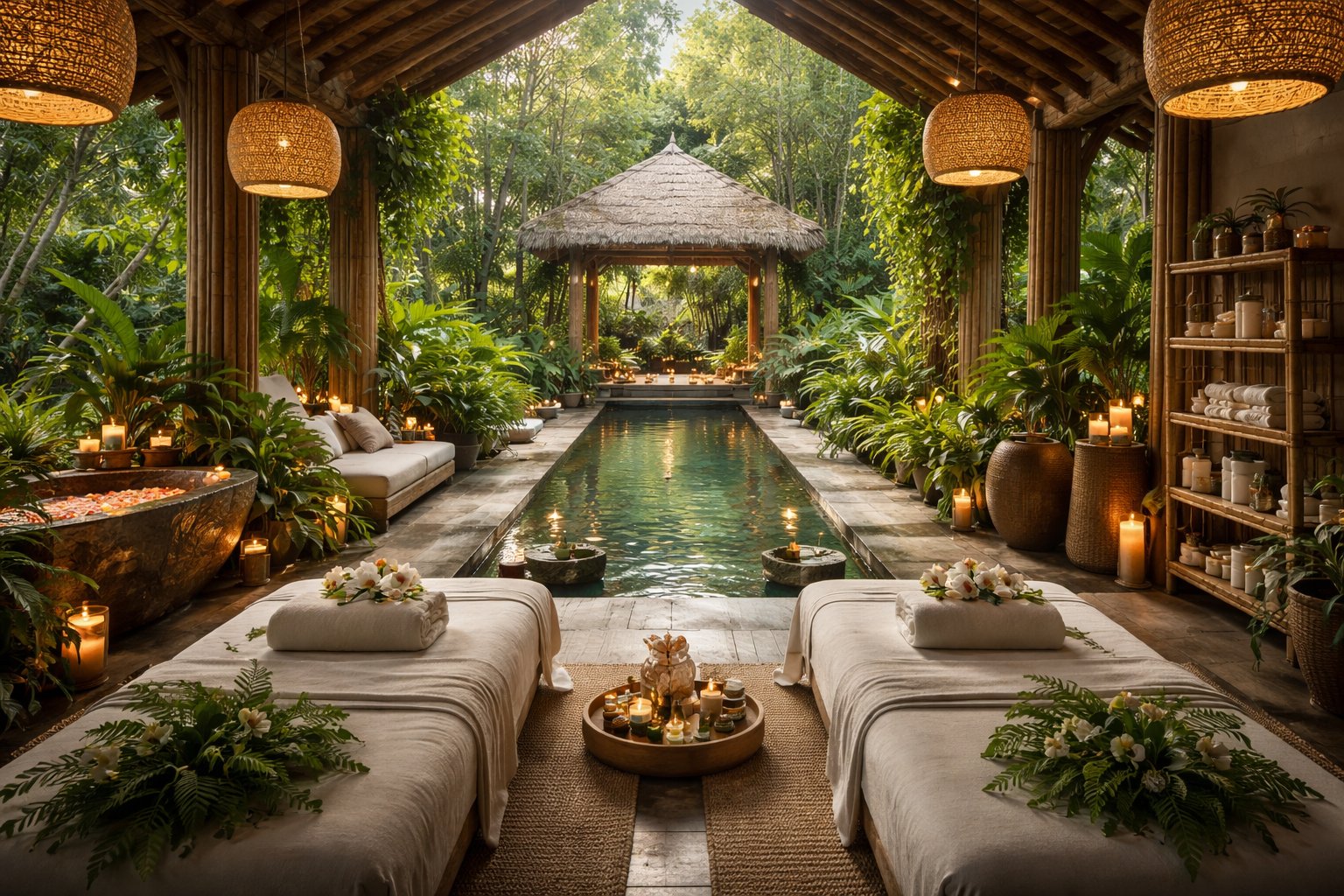
Let me break this down simply: affluent consumers aren't choosing green spas because they want to save the planet (though many do care). They're choosing them because sustainability has become a status symbol—a way to signal their values, sophistication, and insider knowledge.
According to recent research, 73% of affluent consumers consider sustainability important in their purchasing decisions, and nearly half are willing to pay a premium for genuinely sustainable luxury experiences. But here's the critical part: they can spot superficial greenwashing from a mile away.
Rich clients expect extraordinary, meaningful experiences that align with their personal values. When they choose a green spa, they're not looking for discounts or compromises—they're seeking proof that your ethical practices enhance rather than diminish their experience. They want to know that your organic treatments work better, that your sustainably sourced products are more exclusive, and that your environmental initiatives reflect genuine operational excellence.
Think of it this way: a wealthy client choosing your spa over a competitor isn't thinking "I'll sacrifice luxury for sustainability." They're thinking "This spa is sophisticated enough to deliver both, which means they're truly world-class."
Why Sustainability Is a Core Pillar of Modern Luxury
The relationship between luxury and sustainability has fundamentally shifted over the past decade, and honestly, it caught a lot of us in the spa industry off guard.
I remember when "luxury" meant excess—more products, more packaging, more of everything. But somewhere along the way, discerning clients started valuing restraint, intention, and authenticity over abundance. The pandemic accelerated this shift dramatically.
The Psychology Behind Affluent Green Consumers
Wealthy clients today are dealing with what I call "values-based consumption anxiety." They have the resources to buy anything, which means their purchases become expressions of identity rather than necessity. Every choice—including where they get their facial or massage—signals something about who they are.
When a client books your spa, they're asking themselves: "Does this business reflect my values? Will I feel good telling my friends about this experience? Does this align with the person I want to be?"
Sustainability answers all three questions—but only if it's authentic and premium.
Here's what's fascinating: research shows that affluent consumers don't see sustainability and luxury as opposing forces anymore. They see them as complementary. In fact, genuine sustainability enhances perceived luxury because it demonstrates:
- Attention to detail (you care about sourcing, not just aesthetics)
- Long-term thinking (you're not chasing quick profits)
- Exclusivity (truly sustainable practices are harder to execute)
- Insider knowledge (you understand what's actually premium)
- Social responsibility (you're part of the solution, not the problem)
The Cost of Failing to Meet Eco-Conscious Expectations
Let me share what happened when I initially got this wrong.
After that conversation with my tech entrepreneur client, I dug into our booking data and discovered something alarming: our retention rate among high-spending clients had dropped 18% over six months. At the same time, our mid-tier clients were steady.
When I reached out to clients who'd stopped booking, the feedback was consistent: our sustainability efforts felt "performative" and "budget-conscious" rather than genuinely premium. We'd lost credibility with the exact demographic we were trying to attract.
The financial impact was immediate. Those high-value clients weren't just booking more frequently—they were booking higher-priced treatments, buying retail products, and referring their equally affluent friends. Losing them cost us far more than the money we'd "saved" with our half-hearted green initiatives.
But here's the thing that really drove the point home: while we were losing high-end clients, a competitor across town was thriving. They'd invested heavily in genuine sustainability—energy-efficient systems, certified organic product lines, partnerships with ethical luxury brands—and their average ticket price was 40% higher than ours. And they were fully booked.
The lesson? Failing to meet eco-conscious expectations doesn't just cost you clients—it actively pushes them toward competitors who understand that sustainability is a premium positioning tool, not a cost-cutting measure.
What Operational Changes Signal Authenticity to the Affluent Client?
Alright, this is where things get practical. After my wake-up call, I spent months researching what actually works—not just what sounds good in marketing materials.
The key insight: wealthy clients assess authenticity through operational details, not marketing claims. They notice everything, and they can tell when you've made genuine investments versus surface-level changes.
High-End Sourcing and Product Selection
This was my first major overhaul, and honestly, it transformed everything.
I replaced our generic "natural" product line with carefully curated brands that could document their entire supply chain. Instead of saying "organic ingredients," we could tell clients exactly which farm in Provence grew the lavender in their treatment oil, how the farmers were compensated, and why that particular terroir produces superior results.
Here's what sustainable sourcing actually looks like at the premium level:
- Local partnerships with artisan producers who can visit the spa and meet clients
- Single-origin ingredients with documented provenance
- Fair-trade certifications that go beyond minimum standards
- Seasonal treatment menus that reflect what's actually available sustainably
- Transparent pricing that shows clients exactly what they're paying for
The cost? Our product expenses increased by about 35%. But our average treatment price increased by 55%, and clients consistently commented on the quality difference. One regular told me, "I can actually feel that these products are different. My skin responds better."
That's the magic: when you invest in genuinely superior sustainable products, clients notice. It's not marketing—it's tangible quality.
Energy and Environmental Systems That Enhance Experience
This is where I initially got it backwards. I thought energy efficiency meant compromising comfort—dimmer lights, cooler rooms, that kind of thing. Wrong.
Premium energy efficiency actually improves the client experience when done right.
We invested in:
- Smart HVAC systems that maintain perfect temperature and humidity while using 75% less energy than traditional systems
- Circadian lighting that adjusts color temperature throughout the day (incredibly luxurious and energy-efficient)
- Greywater recycling for our steam rooms and hydrotherapy areas, which actually improved water quality
- Solar panels that we made into a design feature rather than hiding them
The upfront cost was significant—about $85,000 for our 3,500 square foot facility. But here's what happened: our energy costs dropped by 60%, and we started marketing ourselves as a "net-zero luxury spa." Within eight months, we'd attracted enough new high-value clients to cover the investment.
More importantly, clients noticed the difference. The lighting felt more natural. The steam room water felt cleaner. The space felt more intentional and thoughtfully designed.
Kate Morrison, Director of Wellness & Sustainability at Ojai Valley Inn, puts it perfectly: "Adding one new green initiative each year keeps our sustainability efforts authentic and evolving. From waterless pedicures to non-toxic cleaning products, these changes resonate with our guests and justify our premium positioning."
Waste Reduction That Signals Luxury, Not Deprivation
This was my biggest mindset shift. I used to think reducing waste meant giving clients less. Actually, it means giving them exactly what they need, presented beautifully.
We eliminated single-use plastics, but we didn't just swap them for paper alternatives. Instead, we invested in:
- Custom glass containers for water and tea, etched with our logo
- Organic cotton robes and linens that we launder with eco-friendly processes
- Refillable luxury dispensers in treatment rooms (clients actually commented that this felt more upscale than tiny bottles)
- Biodegradable packaging for retail products that was more beautiful than conventional packaging
The result? Our waste dropped by 70%, and clients consistently mentioned feeling "pampered" and "cared for" rather than like they were sacrificing anything.
One client told me, "I love that you're not creating garbage every time I visit. It makes me feel good about spending money here." That's the sweet spot—where environmental responsibility and luxury reinforce each other.
How Do Ethically Sourced Retail Products Affect Q4 Sales Conversion?
Let me tell you about last holiday season, because this completely changed how I think about retail.
We'd just completed our transition to fully traceable, ethically sourced products. Every item in our retail area could be traced back to its origin—the specific farm, cooperative, or manufacturer. We created cards for each product explaining its story.
I was nervous. These products cost 40-60% more than what we'd carried before. Would clients actually buy them, especially during the price-sensitive holiday season?
Here's what happened: our Q4 retail sales increased by 127% compared to the previous year.
Why Premium Ethical Products Outsell Generic "Green" Alternatives
The difference came down to storytelling and perceived value. When a client picks up a $85 face serum, they're not just buying skincare—they're buying the story they'll tell themselves and others about that purchase.
Our old approach: "This serum is natural and eco-friendly."
Our new approach: "This serum is formulated by a women-owned cooperative in Morocco using wild-harvested argan oil. The harvesting provides income for 200 Berber women who otherwise have limited economic opportunities. The oil is cold-pressed within 24 hours of harvest to preserve its omega-9 fatty acids, which is why it absorbs so quickly and dramatically improves skin barrier function."
Same basic product. Completely different value proposition.
Wealthy clients weren't just willing to pay more—they preferred paying more because the higher price validated the story. It signaled exclusivity and genuine impact.
The Holiday Gift Advantage
This really showed up during holiday shopping. Affluent clients were actively seeking gifts that would make them look thoughtful, sophisticated, and socially conscious. Our ethically sourced products checked every box.
We created gift sets with detailed information cards about each product's origin and impact. One set featured products from four different women-owned businesses across three continents. It retailed for $340, and we sold out within two weeks.
A client told me, "I can't give my sister-in-law another generic gift basket. But this? This shows I actually put thought into it. And I feel good about where my money's going."
That's the conversion magic: when ethical sourcing is presented as premium curation rather than budget compromise, it becomes a selling point that justifies higher prices and drives purchase decisions.
How Should Your POS System Track Eco-Friendly Product Suppliers?
Okay, this is going to sound nerdy, but stick with me—this operational detail is what separates authentic sustainability from greenwashing.
After we committed to ethical sourcing, I quickly realized our existing POS system couldn't track what we actually needed to know. We could track sales and inventory, but not the information that mattered for sustainability: supplier certifications, carbon footprint, fair-trade status, or ingredient provenance.
What You Actually Need to Track
Here's the framework I developed after consulting with sustainability experts and other spa owners who'd gone down this path:
For each product or ingredient:
- Supplier name and certification status (organic, fair-trade, B Corp, etc.)
- Source location (country, region, specific farm if applicable)
- Last audit date for certifications
- Carbon footprint per unit (if available)
- Percentage of ingredients that meet sustainability standards
- Supplier diversity metrics (women-owned, minority-owned, local)
- Packaging materials and recyclability
For tracking and reporting:
- Total sustainable product percentage by revenue
- Certification coverage across inventory
- Local vs. imported product ratios
- Supplier diversity breakdown
- Year-over-year sustainability improvements
This might sound like overkill, but here's why it matters: when a client asks about your sustainability practices (and wealthy clients will ask), you need specific, credible answers. "We use eco-friendly products" doesn't cut it anymore. "87% of our products are certified organic, 65% are sourced within 500 miles, and we partner with 12 women-owned businesses" is what builds trust.
The System We Implemented
We ended up integrating DINGG's inventory management features with a custom sustainability tracking layer. DINGG already handled our core operations—appointments, client management, staff scheduling—so extending it to track sustainability metrics made sense.
Here's what this looks like in practice: when we receive a shipment of organic massage oil, the system logs not just the quantity and cost, but also the supplier's certification status, the product's carbon footprint, and its origin. When I run reports, I can see exactly how we're tracking against our sustainability goals.
This has been invaluable for three reasons:
- Marketing credibility: We can make specific, verifiable claims about our sustainability practices
- Operational decisions: We can identify which suppliers align with our values and which don't
- Client transparency: When clients ask questions, staff can pull up detailed information immediately
The tracking also revealed surprising patterns. For example, we discovered that our most expensive products weren't always our most sustainable, which led us to renegotiate with several suppliers and ultimately switch to better alternatives.
What Reporting Metrics Should You Use to Validate Sustainability Claims?
This is where most spas lose credibility with affluent clients. You can't just say you're sustainable—you need to prove it with meaningful metrics that demonstrate genuine commitment.
After getting called out for vague sustainability claims, I developed a reporting framework that actually resonates with wealthy clients because it mirrors the kind of data-driven decision-making they use in their own businesses.
The Metrics That Matter to High-End Clients
Wealthy clients don't want to hear about your good intentions. They want quantifiable impact. Here's what I report quarterly (both internally and in client-facing materials):
Environmental Impact Metrics:
- Total energy reduction (kWh and percentage)
- Water conservation (gallons saved through efficiency measures)
- Waste diversion rate (percentage diverted from landfills)
- Carbon footprint reduction (calculated annually)
- Percentage of renewable energy used
Sourcing and Supply Chain Metrics:
- Percentage of products with third-party sustainability certifications
- Percentage of local suppliers (within 500 miles)
- Number of women-owned and minority-owned supplier partnerships
- Fair-trade certified product percentage
- Percentage of packaging that's recyclable or biodegradable
Social Impact Metrics:
- Living wage commitment (percentage of staff earning above living wage)
- Community investment (donations, partnerships, volunteer hours)
- Educational initiatives (workshops, classes, community events)
Operational Excellence Metrics:
- Staff training hours on sustainability practices
- Client satisfaction scores specifically related to sustainability
- Repeat booking rate among eco-conscious clients
The key is presenting these metrics in a way that feels premium rather than preachy. I don't lead with "we're saving the planet"—I lead with "we're committed to operational excellence, and here's the measurable proof."
How to Communicate Metrics Without Sounding Cheap
Here's where I initially went wrong: I created a big poster board in our reception area listing all our sustainability stats. It looked like a high school science fair project.
What actually works:
- Annual impact report (beautifully designed, available digitally and in print)
- Subtle signage in treatment rooms highlighting specific initiatives
- Staff training so team members can discuss metrics conversationally when clients ask
- Social media content that tells stories around the metrics (not just numbers)
- Client newsletter with quarterly updates on progress toward goals
One approach that's been particularly effective: we created a "Sustainability Dashboard" on our website that updates monthly. It's elegant, visual, and allows clients to explore the data at their own pace. We've had multiple clients mention they appreciate the transparency and that it influenced their decision to book with us.
Christina Cabrera, Spa Director at Spa La Quinta, emphasizes this point: "Partnering with vendors who share our sustainability goals ensures that every product and service aligns with our ethical standards, reinforcing our brand promise to clients."
How Can Your Facility Design Reflect Green Operational Trends?
Let me tell you about the moment I realized design could be our biggest sustainability statement.
We were planning a modest refresh of our reception area—new paint, maybe some updated furniture. Then I visited a competitor's newly renovated spa, and it completely changed my perspective. They'd created a space that was simultaneously luxurious and obviously sustainable, where the eco-friendly elements enhanced rather than compromised the aesthetic.
I went back to the drawing board with a much bigger vision and budget.
The Design Elements That Signal Premium Sustainability
The secret is that sustainable design, when done right, actually looks more expensive than conventional design. Here's why: it requires more thought, better materials, and greater attention to detail.
Natural Materials as Luxury Statements:
We replaced synthetic finishes with:
- Reclaimed wood for accent walls and furniture (each piece tells a story)
- Natural stone from local quarries for countertops and flooring
- Organic textiles like hemp and organic cotton in custom colors
- Living plant walls that improve air quality and create a biophilic experience
- Cork flooring that's sustainable, comfortable, and sound-dampening
The result? Our space feels more upscale, not less. Clients consistently comment on how "natural" and "calming" the environment feels. The reclaimed wood, in particular, has been a conversation starter—each piece has visible character and history that new wood lacks.
Lighting as Both Sustainability and Ambiance:
This was one of my best investments. We installed:
- Smart LED systems that adjust throughout the day
- Natural skylights with automated shading
- Candlelight alternatives using LED technology that's indistinguishable from real flames
- Task lighting that allows us to keep ambient lighting low and intimate
The energy savings are significant—LED lighting uses 75% less energy than traditional bulbs. But the real win is that the lighting actually enhances the luxury experience. Clients feel like they're in a high-end resort, not a medical office.
Air Quality and Climate Control:
We invested heavily in systems that improve both sustainability and client comfort:
- Advanced HVAC with HEPA filtration that removes 99.97% of airborne particles
- Humidity control that prevents mold without excessive energy use
- Individual room climate control so clients can customize their comfort
- Essential oil diffusion systems that are healthier than conventional air fresheners
The upfront cost was about $45,000, but the client response has been incredible. Multiple clients have told us our air quality is noticeably better than other spas. One client with severe allergies said we're the only spa where she doesn't have reactions.
Making Sustainability Visible (But Elegant)
This was a delicate balance. I wanted clients to notice our sustainable choices, but I didn't want the space to feel like an environmental education center.
What worked:
- Subtle informational plaques using the same high-end materials as our decor
- QR codes (elegantly designed) that lead to detailed information for interested clients
- Art pieces created from reclaimed materials by local artists
- A feature wall in our retail area explaining our sourcing philosophy
What didn't work:
- Anything that looked like signage you'd find in a public park
- Overcommunicating sustainability to the point where it felt preachy
- Compromising aesthetics for the sake of making an environmental point
The goal is for clients to feel the sustainability through the quality of the space, then discover the details if they're interested in learning more.
Marketing Strategies to Avoid "Cheap" Sustainability Messaging
This is where I see most spa owners completely sabotage their green efforts. They invest in genuine sustainability, then market it in ways that make them sound budget-focused instead of premium.
Let me share the before-and-after of our marketing transformation, because it's night and day.
What Not to Do (Lessons from My Mistakes)
My old marketing copy: "Save the planet while saving money! Our eco-friendly spa uses sustainable products that are better for the environment and your wallet."
Ugh. Reading that now makes me cringe. Here's what was wrong:
- Leading with "save money" immediately signals budget positioning
- "Eco-friendly" is vague and overused
- No specific benefits or differentiators
- No emotional connection or storytelling
- Sounds apologetic, like sustainability is a compromise
This kind of messaging actively pushed away affluent clients. They don't want to "save money"—they want to spend money on something meaningful and exclusive.
The Premium Sustainability Messaging Framework
After completely overhauling our approach (and consulting with a brand strategist who specialized in luxury wellness), here's what actually works:
Lead with exclusivity and values: "We partner with single-origin suppliers and ethical producers to curate treatments you won't find anywhere else—each one designed to deliver exceptional results while honoring the people and places that make them possible."
See the difference? This messaging:
- Emphasizes curation and exclusivity ("you won't find anywhere else")
- Focuses on results and experience ("exceptional results")
- Connects to values without being preachy ("honoring the people and places")
- Uses sophisticated language that matches our target demographic
Tell specific, compelling stories:
Instead of: "We use organic products."
Try: "The wild-harvested seaweed in our signature body wrap is hand-collected by a family-run operation off the coast of Maine. The harvesting method, perfected over three generations, ensures the kelp forests remain healthy and productive. The result? Seaweed with dramatically higher mineral content than farmed alternatives—and you can feel the difference."
This approach works because it:
- Creates a vivid mental image
- Demonstrates expertise and care
- Connects sustainability to quality
- Gives clients a story to share with friends
Channel-Specific Approaches
Instagram and Visual Platforms:
Don't show: Recycling bins, "save the planet" graphics, or anything that looks like a corporate social responsibility report.
Do show:
- Behind-the-scenes content of your sourcing trips
- Beautiful shots of local suppliers and artisans
- Close-ups of natural ingredients and materials
- Your facility's design elements that happen to be sustainable
- Client testimonials about quality and experience (not about being eco-friendly)
The sustainability should be implied through the quality and thoughtfulness visible in every image, not explicitly stated in every caption.
Website Copy:
Create a dedicated "Our Philosophy" or "Our Values" page rather than plastering sustainability claims throughout your site. This allows interested clients to dig deep while keeping your main service pages focused on benefits and experience.
On this page, get specific:
- Name your suppliers and partners
- Share your sustainability metrics
- Explain your decision-making process
- Show the progression of your efforts over time
- Link to third-party certifications
Email Marketing:
This is where you can go deeper with clients who've already experienced your spa. Share:
- Monthly spotlights on specific suppliers or ingredients
- Behind-the-scenes looks at operational improvements
- Invitations to sustainability-focused events or workshops
- Updates on your measurable impact
One of our most successful email campaigns featured a video interview with the woman who formulates our signature facial oils. She walked through her organic farm in Italy, explaining her philosophy and process. The open rate was 67%, and we had 23 bookings directly attributed to that email.
The Power of Third-Party Validation
Here's something I learned the hard way: your own claims about sustainability are less credible than third-party validation, no matter how true they are.
We pursued several certifications and partnerships that allowed us to leverage external credibility:
- B Corp certification (rigorous but worth it)
- Green Spa Network membership
- Partnerships with established ethical brands (being able to say "we're the only spa in our region carrying Brand X" is powerful)
- Local sustainability awards (we applied for and won two)
- Press coverage in wellness and lifestyle publications
Each of these allows us to say "recognized by" or "certified by" rather than just making claims. The difference in client trust is dramatic.
Common Mistakes to Avoid When Positioning Your Spa as Sustainably Luxurious
Let me save you from the painful (and expensive) mistakes I made during our transition. Some of these cost us clients, money, and credibility—but they taught me exactly what not to do.
Mistake #1: Half-Measures That Undermine Your Message
This was my biggest early failure. I tried to dip my toe into sustainability by making small, visible changes while keeping most operations the same.
We switched to paper straws but kept using plastic cups. We offered one "eco-facial" while the rest of our menu was conventional. We talked about sustainability on social media but our facility design hadn't changed.
The result? Clients saw right through it. We got called out in an online review for "greenwashing," and that review stayed at the top of our Google listing for months.
The lesson: Commit fully or don't claim it at all. Wealthy clients would rather you be honest about being in transition than pretend you're already there.
What I should have done: Announced that we were beginning a multi-year sustainability journey, shared our roadmap, and invited clients to follow our progress. That would have been authentic and built engagement instead of skepticism.
Mistake #2: Sacrificing Quality for Sustainability Points
In my eagerness to be "green," I initially made product choices based primarily on sustainability credentials rather than performance.
I switched to a skincare line that was certified organic and locally made—but it didn't work as well as our previous products. Clients noticed. Several regulars commented that their facials weren't delivering the same results.
The lesson: Sustainability can never compromise results. For luxury clients, performance is non-negotiable. You need products that are both sustainable and superior.
This is why the sourcing process took me months. I tested dozens of product lines before finding ones that met both criteria. When we finally switched, clients noticed the improved results first, then learned about the sustainability as a bonus.
Crystal Poe-Cabatbat, Director of Spa at Kohanaiki, captures this perfectly: "Balancing wellness and environmental stewardship means investing in energy-efficient systems and natural products that enhance guest experience while reducing our footprint."
Mistake #3: Letting Sustainability Become Your Only Identity
After our initial transformation, I got so excited about our sustainability efforts that I made them the centerpiece of all our marketing.
Big mistake. We started attracting clients who were primarily interested in sustainability—which sounds good, except many of them were price-sensitive and chose us over competitors based on shared values rather than service quality. Our average ticket price actually dropped for a few months.
Meanwhile, some of our luxury-focused clients felt like we'd shifted away from premium service toward environmental activism.
The lesson: Sustainability should enhance your luxury positioning, not replace it. You're a luxury spa that happens to be sustainable, not a sustainable spa that happens to offer luxury services.
I recalibrated our messaging to lead with experience, results, and exclusivity, with sustainability as a supporting element that reinforces our premium positioning. Our ideal clients appreciate the sustainability, but they book with us because we deliver exceptional service.
Mistake #4: Inconsistent Implementation Across Touchpoints
We'd invested heavily in sustainable operations inside our spa, but I neglected some client-facing touchpoints that undermined our message.
We were sending appointment confirmations and marketing emails that weren't optimized (leading to unnecessary server energy use). Our online booking system was clunky and required lots of back-and-forth. We hadn't trained front desk staff thoroughly on our sustainability practices, so they couldn't answer detailed client questions.
The lesson: Every touchpoint needs to reflect your values and standards. Inconsistency creates doubt about your authenticity.
This is actually where DINGG's integrated platform became invaluable. We consolidated our booking, client management, marketing, and operations into one system that reduced our digital footprint while improving the client experience. Clients can book instantly 24/7, receive automated communications, and manage everything through an elegant interface—all while we reduce unnecessary email volume and streamline operations.
Mistake #5: Forgetting That Staff Buy-In Is Critical
I made all these operational changes without adequately preparing and involving my team. Some staff members were skeptical. Others didn't understand why we were making changes. A few resented the additional training requirements.
This created inconsistent service. Some team members enthusiastically explained our sustainability practices to clients, while others avoided the topic or even made dismissive comments.
The lesson: Your team needs to believe in and embody your sustainability commitment, or clients won't believe it either.
I started over with staff engagement:
- Involved team members in decision-making about which products and practices to adopt
- Created a sustainability committee with representatives from different roles
- Offered bonuses tied to sustainability goals
- Provided regular training and education
- Celebrated wins and milestones together
Once staff bought in, everything changed. They became our best ambassadors, sharing their genuine enthusiasm with clients in ways that marketing never could.
Mistake #6: Underestimating the Investment Required
I initially tried to do sustainability on a budget, thinking I could make meaningful changes without significant capital investment.
Reality check: authentic sustainability at the luxury level is expensive upfront. The energy-efficient systems, premium sustainable products, facility improvements, certifications, and staff training all require real money.
The lesson: Budget appropriately and think long-term ROI, not short-term savings.
When I finally committed to proper investment—about $180,000 total over 18 months—the results justified the expense. Within two years, we'd increased our average client value by 45%, attracted a more affluent demographic, and reduced our operating costs enough to achieve positive ROI.
But I should have planned for this investment from the beginning rather than trying to do it piecemeal.
When Should You Use Sustainable Practices as a Marketing Focus?
Not every spa should lead with sustainability in their marketing, and that's okay. Here's how to think about when it makes sense for your business.
When Sustainability Marketing Works
Your target demographic values environmental and social responsibility:
If your ideal clients are affluent professionals, wellness enthusiasts, or conscious consumers—basically the demographic that shops at Whole Foods and drives a Tesla—sustainability messaging will resonate strongly.
Look at your current client base. Do they ask about your sourcing? Do they mention environmental concerns? Do they shop at farmers markets and support local businesses? These are signals that sustainability could be a powerful differentiator.
You're genuinely committed to the operational changes:
This cannot be overstated. Wealthy clients will investigate your claims. If you're not prepared to back up your marketing with real, verifiable practices, don't make sustainability a focus.
I've seen competitors get absolutely destroyed in reviews when clients discovered their "eco-friendly" claims were exaggerated. The reputational damage far outweighed any short-term marketing benefits.
You have the resources to implement properly:
Half-measures hurt more than they help. If you can't afford to do sustainability right—meaning premium sustainable products, facility improvements, certifications, and staff training—it's better to wait until you can.
Your competitive landscape creates an opportunity:
If you're in a market where no other luxury spas are emphasizing authentic sustainability, you have a genuine differentiator. But if several competitors are already there, you need to either match their level of commitment or find a different angle.
When to Downplay or Delay Sustainability Focus
Your clients prioritize other factors:
Some demographics care more about other elements—celebrity endorsements, specific treatment modalities, medical spa services, etc. If sustainability doesn't resonate with your target market, making it a central message will fall flat.
You're in transition:
If you're still in the process of implementing sustainable practices, it's better to be quiet about it until you're ready to fully deliver. You can mention you're "exploring more sustainable options" without making it a marketing centerpiece.
Your price point doesn't support the investment:
Genuine sustainable luxury is expensive. If your business model depends on volume and competitive pricing, trying to add premium sustainability might not be financially viable.
You're not personally passionate about it:
Clients can tell when business owners are genuinely committed versus just checking a marketing box. If sustainability doesn't authentically excite you, that lack of passion will show through.
Frequently Asked Questions
Why do wealthy clients prefer green or eco-friendly spas?
Affluent clients view authentic sustainability as a marker of quality, sophistication, and values alignment. It signals that a spa is committed to operational excellence, not cutting corners. They're willing to pay premium prices for experiences that reflect their personal values and offer exclusive, meaningful treatments they can't find elsewhere. Sustainability has become a status symbol and differentiator in luxury wellness.
How can a spa implement sustainability without appearing cheap?
Lead with luxury, quality, and exclusivity while letting sustainability enhance that positioning. Focus on high-end sustainable products that perform better, invest in facility improvements that enhance client experience, and use sophisticated storytelling about sourcing and practices. Never position sustainability as a cost-saving measure—frame it as an investment in exceptional quality, exclusive ingredients, and operational excellence that justifies premium pricing.
What are some high-end operational changes that justify premium pricing?
Key changes include partnering with single-origin suppliers and artisan producers, installing energy-efficient systems that enhance comfort, using certified organic products with documented provenance, implementing waste reduction through premium alternatives (not cheaper substitutes), creating custom experiences around sustainable ingredients, and obtaining third-party certifications like B Corp. Each change should demonstrably improve the client experience while reflecting genuine ethical commitment.
How important is local sourcing in luxury green spas?
Local sourcing is valuable when it enhances quality and exclusivity. It reduces carbon footprint, supports community economies, and allows spas to offer unique, culturally significant treatments. However, local isn't always superior—sometimes the best ingredients come from specific regions worldwide. The key is transparent sourcing that prioritizes both quality and ethics, whether local or international, and telling the story behind each choice.
Can sustainability improve a spa's profitability?
Yes, when implemented authentically at the premium level. Sustainability attracts high-value clients willing to pay more, improves operational efficiency long-term (reducing energy and waste costs), enhances brand reputation leading to word-of-mouth referrals, increases client retention among affluent demographics, and justifies higher pricing. Initial investment is significant, but ROI typically materializes within 18-24 months through increased average ticket prices and client lifetime value.
What certifications should luxury spas pursue to validate sustainability?
B Corp certification offers the most rigorous validation of overall ethical business practices. Green Spa Network membership provides industry-specific credibility. LEED certification validates facility sustainability. Organic certifications (USDA, COSMOS, Ecocert) for products demonstrate genuine ingredient standards. However, certifications alone aren't enough—wealthy clients care more about transparent practices and measurable impact than logos on your wall.
How do luxury spas balance sustainability with guest comfort?
By investing in advanced technologies and premium solutions that enhance rather than compromise experience. Energy-efficient HVAC maintains perfect climate control, smart lighting systems improve ambiance, sustainable products are chosen for superior performance, water conservation technologies actually improve water quality, and facility design uses natural materials that feel more luxurious. The key is never asking clients to sacrifice comfort—sustainability should be invisible to them or actively improve their experience.
What role does staff training play in sustainable luxury spas?
Staff training is critical for authentic implementation. Team members need to understand sustainability practices deeply enough to discuss them naturally with clients, embody values in their daily work, identify opportunities for improvement, and communicate enthusiasm genuinely. Without proper training, sustainability efforts feel performative. Invest in ongoing education, create internal sustainability committees, and tie compensation to sustainability goals to ensure full team buy-in.
How can spas market sustainability without greenwashing?
Use specific, verifiable claims backed by data and third-party validation. Tell detailed stories about suppliers, sourcing, and practices rather than making vague "eco-friendly" statements. Share your sustainability metrics transparently, including areas where you're still improving. Avoid exaggeration or implying environmental benefits that aren't measurable. Focus on the quality and exclusivity that sustainable practices enable rather than making environmental claims the centerpiece. When in doubt, under-promise and over-deliver.
What are emerging trends in sustainable luxury spa operations?
Current trends include circular luxury design (products designed for reuse and minimal waste), blockchain technology for transparent carbon offsetting, AI-powered systems that reduce resource consumption while personalizing guest experiences, integration of wellness with environmental stewardship (nature-based treatments, biophilic design), partnerships between luxury brands and indigenous communities for traditional knowledge, and increasingly sophisticated measurement of social impact beyond environmental metrics. The future of luxury spa sustainability is about holistic systems thinking, not isolated initiatives.
Taking Action: Your Roadmap to Sustainable Luxury Positioning
If you're feeling overwhelmed by everything we've covered, I get it. When I started this journey, the gap between where we were and where we needed to be felt insurmountable.
Here's the thing: you don't have to do everything at once. In fact, you shouldn't. Rapid, superficial changes are what lead to the "cheap sustainability" perception we've been trying to avoid.
For Spa Owners Just Starting Out
If you're in the early stages of considering sustainability:
Start with assessment:
- Audit your current practices honestly
- Identify your biggest environmental impacts (energy, water, waste, sourcing)
- Survey your clients to understand how much they value sustainability
- Research what competitors are doing
- Calculate the potential investment required
Pick one area to excel in:
- Maybe it's product sourcing—commit to premium sustainable products for one treatment category
- Maybe it's energy efficiency—invest in lighting and HVAC upgrades
- Maybe it's waste reduction—eliminate all single-use plastics with beautiful alternatives
Do that one thing exceptionally well before moving to the next. This builds credibility and allows you to test messaging with clients.
Communicate your journey:
- Be transparent that you're in transition
- Share your goals and timeline
- Invite client feedback and input
- Celebrate milestones as you achieve them
This approach builds authenticity because clients see your genuine commitment over time rather than overnight claims that feel suspicious.
For Established Spas Elevating Their Positioning
If you already have some sustainable practices but want to strengthen your premium positioning:
Audit for consistency:
- Identify gaps where your practices don't match your messaging
- Look for areas where you've compromised quality for sustainability
- Assess whether your facility design reflects your values
- Review your marketing to ensure it emphasizes luxury first, sustainability second
Invest in visible upgrades:
- Facility improvements that clients notice immediately
- Premium product lines with compelling stories
- Staff training that creates enthusiastic ambassadors
- Marketing materials that look and feel luxurious
Deepen your partnerships:
- Visit suppliers in person and document the experience
- Create exclusive treatment collaborations
- Bring in suppliers for client events or workshops
- Develop your own signature products with ethical partners
Measure and share impact:
- Implement proper tracking systems (this is where DINGG's platform can consolidate operations and reporting)
- Create quarterly impact reports
- Share metrics through elegant, design-forward communications
- Use data to identify and prioritize your next improvements
For Spas Already Committed to Sustainability
If you're already doing the work but not seeing the business results you expected:
Revisit your messaging:
- Are you leading with sustainability or with luxury?
- Does your language sound premium or budget-conscious?
- Are you telling specific stories or making generic claims?
- Do your visuals match the sophistication of your operations?
Elevate your price point:
- If you've made genuine investments in sustainability, your prices should reflect that
- Test premium pricing on new treatments or services
- Create ultra-luxury tiers that showcase your best sustainable practices
- Package sustainability into exclusive experiences
Pursue validation:
- Apply for certifications you haven't yet obtained
- Seek press coverage in luxury wellness publications
- Partner with established premium brands
- Submit your spa for sustainability awards
Expand your impact storytelling:
- Go deeper on supplier relationships and sourcing
- Share the broader social impact of your choices
- Connect your practices to larger wellness and environmental movements
- Create content that positions you as a thought leader
The Bigger Picture: Sustainability as Competitive Advantage
Here's what I've come to understand after three years of completely transforming our spa: sustainability isn't just the right thing to do environmentally and socially—it's become the defining competitive advantage in luxury wellness.
The spas that will thrive over the next decade aren't the ones with the most services or the lowest prices. They're the ones that create meaningful, values-aligned experiences that wealthy clients actively seek out and pay premium prices for.
Research shows that 46% of affluent consumers are willing to pay more for genuinely sustainable luxury experiences. That number will only increase as younger, values-driven consumers accumulate wealth and as environmental and social challenges become more pressing.
But here's the key: this only works if your sustainability is authentic, premium, and seamlessly integrated into an exceptional experience. Wealthy clients can spot greenwashing instantly, and they'll punish it with their wallets and their reviews.
When you get it right, though? The business results are remarkable. Our spa has seen:
- 45% increase in average client value
- 127% increase in retail sales
- 15% improvement in client retention
- 30% reduction in no-shows (clients are more committed when they feel aligned with your values)
- Significant reduction in marketing costs (word-of-mouth referrals from satisfied clients)
More importantly, running a sustainable luxury spa is deeply fulfilling. I'm proud of the business we've built—not just because it's profitable, but because it reflects genuine values and creates positive impact while delivering exceptional experiences.
If you're ready to position your spa as a sustainable luxury destination, start with one meaningful change today. Choose the highest-quality sustainable product line you can find for one treatment. Invest in one significant facility improvement. Partner with one ethical supplier whose story you can tell compellingly.
Then build from there, always prioritizing quality and authenticity over speed or marketing buzz.
Your wealthy clients are already looking for what you can offer. They're tired of choosing between luxury and values, between indulgence and responsibility. Show them they don't have to compromise, and they'll reward you with their loyalty, their referrals, and their willingness to pay what your elevated service is truly worth.
The future of luxury wellness is sustainable. The question is whether you'll be positioned to capture that market—or whether you'll watch your competitors claim it while you're still deciding whether to invest.
I know which choice transformed my business. Now it's your turn.