Neurowellness Is 2026's Biggest Spa Trend. Build for It
Author
KOELIDate Published
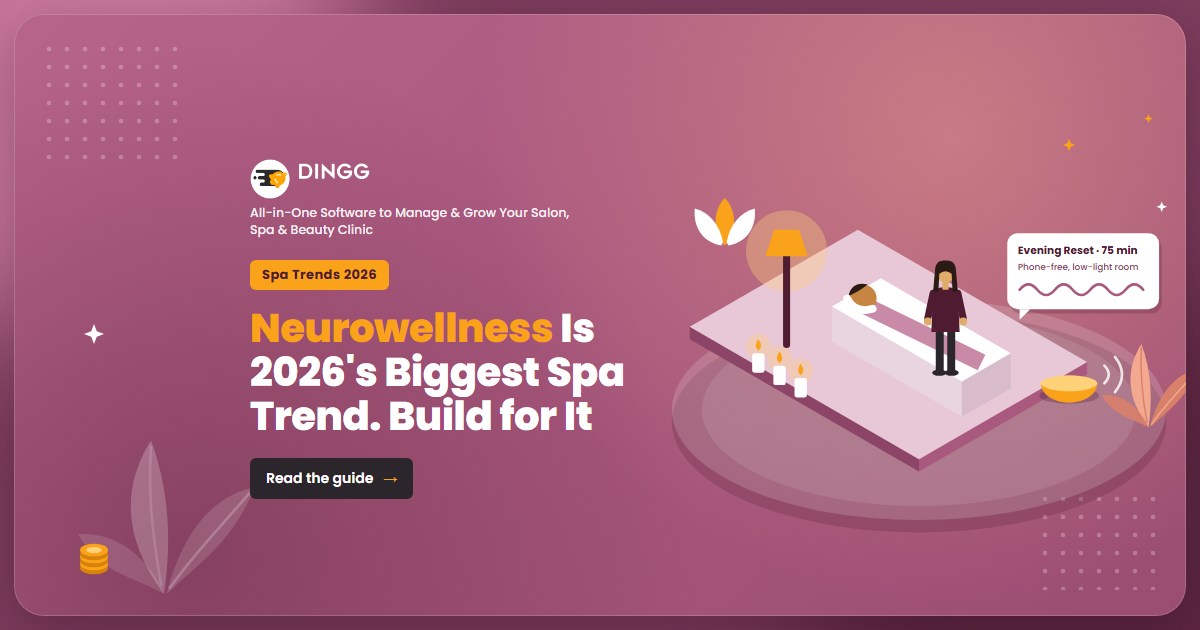
Picture a client arriving at a day spa on a Tuesday evening. She drops her phone into a felt pouch at reception and sits in a dim, silent room for four minutes before her therapist comes in. No tablet form, no playlist choice, no biometric scan. Just quiet, a slow greeting, and a 60-minute massage built on long, deliberate strokes. She rebooks before she leaves.
That's what the spa trends 2026 conversation is really about. Not another device, not another metric. A return to calm, delivered with discipline. If your spa management software can tag that visit, track the rebook and prompt a follow-up three days later, you already have most of what this trend needs.
The short answer: Neurowellness spa treatments repackage what spas already do (touch, breath, stillness, warmth) around one goal: helping clients shift from stress into rest. The opportunity is less about buying equipment and more about naming, standardising and consistently delivering what your therapists can already do, then measuring whether clients come back for it.
Who should keep reading
You run a multi-therapist day spa or wellness centre with 8 to 30 staff, probably in India, the UAE or the US, and you're deciding what to add or reposition on your menu for the next year. You've read trend reports before and watched most of them evaporate.
If you're a single-chair studio, this menu architecture will feel oversized. Start with these spa marketing ideas and come back when volume justifies a pilot.
What neurowellness means, in plain words
Strip away the jargon and you get three words: rest, regulation, recovery.
The Global Wellness Summit's Future of Wellness 2026 report (27 January 2026) names The Rise of Neurowellness among its 10 trends for the year: calming the nervous system through everything from somatic practices to consumer neurotech. Your therapists may never use that word, but every good one knows the difference between a client who leaves still clenching their jaw and one who leaves visibly slowed down.
Why now? The same report names The Over-Optimization Backlash as another 2026 trend. After years of wearables, biohacking routines and tracking every metric, many high-spending wellness clients are tired of self-improvement as a project. They don't want another dashboard. They want someone to tell them to lie down in a quiet room.
Your spa is already built for that. Most menus just don't say so.
The demand is there. Mental wellness grew 12.4% a year from 2019 to 2024, the second-fastest wellness sector after wellness real estate (Global Wellness Institute, November 2025). And US spa menus show that hands still beat machines: LED light therapy is offered by 62% of day spas, head spa by 29%, percussive massage by 13% and robotic massage by just 1% (ISPA 2026 U.S. Spa Industry Study).
Spa trends 2026: five neurowellness menu ideas to pilot
Each of these can be tested without major spending.
1. A slow-stroke "nervous-system reset" massage. 60 or 75 minutes of deliberately slow, rhythmic strokes. No pressure menu, no "relaxation or deep tissue" choice. One protocol, one pace. The room is dim, and the therapist speaks only at the start and end.
2. A 10-minute breathwork add-on before the treatment. The cheapest entry point. A guided breathing sequence before hands-on work, led by the therapist or a simple audio track. Many clients find it helps them settle, so the main treatment starts from a calmer place.
3. Sound-based sessions. Singing bowls, tuning forks or a consistent low soundscape layered into bodywork. You don't need a separate sound-bath room, just a trained therapist and a protocol.
4. Low-stimulus rooms. Dim lighting, no music menu, a phone-free policy. This is an environment change, not a treatment change. It can wrap around any service you already sell. It costs almost nothing and positions you clearly.
5. Evening sleep-focused slots. A 7 or 8 pm window framed around winding down for sleep. Same massage, different time, different name, plus a short wind-down tip the next morning for clients who opted in to messages. If your booking system can tag these slots and track their rebook rate, you'll know within weeks whether it works. This is exactly why spa management software is important for menu decisions.
Name and describe it without medical claims
This is where spas most often stumble. You can't claim a treatment cures anxiety, fixes insomnia or treats any condition. Full stop.
What you can do is describe the experience and the intention. "Designed to help you switch off" is fair. "Treats anxiety" is not. "Slow, rhythmic bodywork to help your body shift from busy to rested" tells the client exactly what to expect without crossing a line.
Symptom-led language works well in marketing: "for people who can't switch off", "screen-tired", "still wired at 10 pm". It speaks to how clients feel without diagnosing anything.
Visual checkpoint: after checkout, can a guest describe the benefit in one sentence? If not, the positioning is too vague.
Pilot one treatment and judge it properly
Pick one idea. Run it for six to eight weeks. Judge it on three numbers:
Attach rate: the share of eligible bookings that include it.
Rebook rate: how many first-timers book it again within 30 days.
Revenue per treatment hour: whether the slot earns more, less or the same as the menu item it replaces.
If you tag treatments properly in your spa management software, treatment performance reports should give you these numbers in minutes. If you can't pull them, that's the first gap to close.
Illustrative example: price a 75-minute reset at ₹4,500 (about $120 or AED 440 in your local equivalent) against a standard 60-minute massage at ₹3,000. If its attach rate and 30-day rebook rate both beat your house average after six weeks, you have a signal. If neither moves, rename it, rebrief the team, or retire it.
Therapist consistency is the real bottleneck
The biggest risk isn't demand. It's inconsistent delivery. If three of your five therapists explain the service differently, it isn't ready.
Consistency looks like a short cue sheet (five points at most): how to greet the client, how to describe the session's intention, the stroke pace and sequence, and how to close. Add a short front-desk script so reception frames it the same way every time.
This is change management, not extra training. Your therapists have the skill; the language and ritual need standardising. Targeted campaigns can fill pilot slots, but only if Monday morning and Friday evening feel identical.
What not to chase (yet)
Expensive neurotech devices before demand is proven. Neurofeedback headsets and stimulation gadgets are interesting, but they're costly, need maintenance, need client education and consent language, and add cleaning routines. Prove the service with hands and breath first. Then ask whether a device adds anything measurable.
If you're curious about where technology does fit, our round-up of AI skin analysis tools is a better place to start than neurotech.
The Ugly Truth
Guests say "lovely" but don't rebook — Fix: Rename around one outcome ("sleep reset", "stress downshift") · Why it happens: The benefit sounds generic
Staff explain it differently every time — Fix: A five-point cue sheet and a short reception script · Why it happens: No protocol document
The premium price gets pushback — Fix: Tie the price to extra time or a distinct pre/post ritual · Why it happens: Value framed as luxury, not purpose
Ads get clicks but no bookings — Fix: Use symptom-led copy: screen-tired, can't switch off · Why it happens: Trend language is too broad
A new device sits unused — Fix: Pilot manually first; add tech only after demand is proven · Why it happens: Equipment arrived before the workflow
Guests distrust the claims — Fix: Describe the experience, never medical outcomes · Why it happens: Overpromising wellness language
Where owners disagree: measure it or keep it human?
Some operators want neurowellness services to include a measurable element, such as heart-rate readings or before-and-after stress scores, arguing it proves value and justifies a premium. Others say adding metrics to a calming experience contradicts the very backlash driving the trend, and that devices add friction most day spas can't sustain.
With robotic massage on only 1% of US day-spa menus (ISPA 2026), starting experiential and adding measurement only once demand is proven looks like the lower-risk path. But it's genuinely unsettled, and the answer depends on your clients.
FAQs
What is neurowellness in a spa?
Neurowellness means services designed to help clients shift from stress into rest through touch, breath, sound and environment. For most spas it's a reframing of treatments you already offer (massage, breathwork, quiet rooms) with clearer language and a consistent ritual. It's one of the named trends in the Global Wellness Summit's 2026 report.
Which neurowellness trend should a small spa start with?
A short breathwork add-on before existing massages. It costs almost nothing, needs little training and attaches to bookings you already have. Run it for six weeks, track how many clients add it and whether they rebook, and decide from there. Low-stimulus rooms are a close second because they change the environment, not the service.
How should I price a new neurowellness ritual?
At a modest premium over your closest existing service, justified by extra time or a distinct pre- and post-treatment ritual. For example, if a 60-minute massage is ₹3,000, a 75-minute reset at ₹4,500 gives clients a visible reason for the difference. Test for six weeks, then adjust based on attach and rebook rates.
How do I market neurowellness treatments without overclaiming?
Describe the experience and intention, never a medical outcome. "Designed to help you switch off" is honest; "cures anxiety" is a liability. Use symptom-led phrases like "screen-tired" or "can't switch off" so clients recognise themselves, and let the experience do the convincing. Brief staff to use the same language.
A menu pilot is only as good as the numbers you can pull at the end of it. If you're evaluating spa, salon and beauty clinic software that makes bookings, rebooking and reporting routine, book a free DINGG demo for a live walkthrough and answers to your questions before your first pilot slot goes live.