GLP-1 Clients Are Coming to Your Spa. Is Your Menu Ready?
- Author
- KOELI
- Date Published
- Reading time
- 9 min read
Picture a client walking into a skin clinic in Mumbai. She has lost a lot of weight over the past eight months, has never had a facial, and wants to ask about the loose skin along her jawline. She doesn't know the word "laxity". She has no treatment history. She found you on Instagram, and she's nervous.
This is your next client. If your spa management software routes every new enquiry into the same generic consultation, you may lose her before she sits down.
The short answer: GLP-1 med spa services are companion services (skin-quality facials, lymphatic massage, body treatments, home-care routines and referrals) for clients going through medically supervised weight loss. Spas don't prescribe. Their job is careful intake with consent, a staged plan over 6 to 12 months, and marketing that respects the client.
Why this client is suddenly everywhere
11% of US adults now take a GLP-1 medication for weight loss, up from 3% in 2024 (Gallup, survey of 5,065 adults, 28 May to 5 June 2026). The same class of medicines is prescribed across the UAE and India, so the effect on spa and clinic enquiries isn't only a US story.
What matters for you is who these clients are. In a McKinsey survey of 174 med spas and aesthetics providers (end of 2024), 63% of patients seeking facial aesthetic treatments were not active aesthetics users, and roughly half of those had never considered aesthetics before their weight loss.
Sit with that. Your new client isn't comparing you with the med spa down the road. She's comparing you with doing nothing. She may not know what radiofrequency is or how to judge before-and-after photos. She knows her face and body changed faster than she expected, and she wants help.
Who should keep reading
Med spas, skin and beauty clinics, and day spas with body treatments in the US, UAE and India, with a few staff and room to add services. If you're a single-chair studio without body-treatment capability, this probably isn't your next move. If you need clinical protocols or drug information, that's a conversation for a physician.
A mandatory note on safety and scope
This article is not medical advice. Prescribing or supplying GLP-1 medicines requires a licensed medical practitioner and must follow local law: they are prescription-only in India, DHA or DOH licensing governs prescribing in the UAE, and state rules apply in the US.
Your spa's role is companion services, careful intake and referral. Not prescribing, not supplying, not diagnosing. If a client asks you for the medication, the right answer is a referral to their doctor.
What this client usually worries about
In consultations, the concerns tend to cluster around skin that feels looser (jawline, arms, thighs), a face that looks thinner or more tired, dry or sensitive skin, less muscle tone, and confidence that hasn't caught up with the change. Listen for which one matters most to this client, and write it down in her own words.
GLP-1 med spa services your menu can include
The temptation is to sell a big contouring package on visit one. Resist it. While weight is still changing, results from contouring work are harder to predict, and a client who feels oversold won't return. Start with skin quality and build from there.
Companion services within most spa licences
Hydration and barrier-repair facials as the entry point.
Lymphatic drainage massage for comfort and relaxation.
Body treatments focused on skin quality (not fat reduction) for arms and thighs.
Home-care routines so the client has something to do between visits.
Referrals to dietitians, trainers or physicians for what your licence doesn't cover.
A day spa without medical oversight stops at companion services and referral. A med spa with physician oversight can add energy-based or injectable treatments where the treating clinician judges it appropriate. Know which category you're in and build the menu to match. For the licensing and operating basics, see our guide to starting a med spa.
Timing is part of the plan
Ask where the client is in her journey. If her weight is still changing noticeably month to month, focus on skin quality and maintenance and leave bigger decisions for later, ideally in consultation with her doctor. That means your intake has to capture the timeline.
Intake, consent and records that protect everyone
Your intake form should ask, with the client's consent: current medications (including GLP-1 use), roughly how much weight has changed and over what period, whether it's still changing, and any skin concerns or sensitivities she has noticed. Store the answers securely and limit who can see them. Build these questions into the intake template in your spa management software so nobody skips them on a busy day.
Build consented progress photos into the workflow from day one. They set realistic expectations, show progress across a multi-month plan and protect you if a client later disputes results. Treat them like health records: access-controlled and dated, with separate consent for any marketing use.
Digital consent forms keep all of this attached to the right client instead of in a drawer, and client profiles let every therapist see the treatment history and notes before the client sits down.
Visual checkpoint: pull four client files at random. If fewer than three have medication history, a timeline and a next follow-up date, fix intake before you market anything to this audience.
Build packages around a 6-to-12-month journey
One facial won't meet this client's needs, and neither will one body wrap. The opportunity is a package or membership built around a realistic timeline.
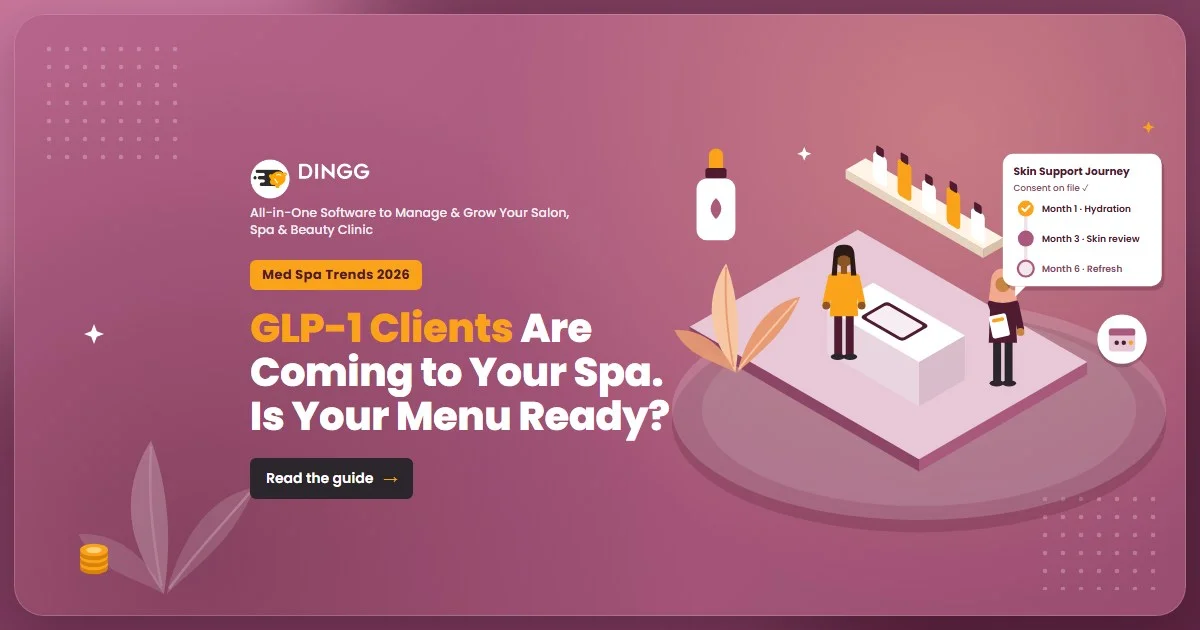
Illustrative example: a "Skin Support Journey" membership with two hydration facials and one lymphatic session a month, a quarterly skin review, and a home-care product credit. Price it for your market. The structure is the point: predictable revenue for you, consistent care for her, and a reason to come back every month.
This matters most for medi-spas, which make up 8% of US spa locations, about 1,820 (ISPA 2026 U.S. Spa Industry Study), but day spas can run the companion version too. To test whether recurring plans suit your business, read our breakdown of when to launch a membership program.
The monthly check-in is where retention really happens: reassess, adjust the plan, and deepen the relationship.
Marketing without body-shaming or false promises
You can't market these services like a standard facial offer. No before-and-after promises. No headlines about "fixing" a face. No claims about medical outcomes.
What works is language about skin health, comfort and self-care during a change: "support your skin through change", not "reverse the damage". Train your team too. A therapist who says "so you've lost a lot of weight and now your skin is saggy" has just lost a client. Listen first, use the client's own words, and never frame weight loss as damage.
This is also a segmentation job, and one of the reasons spa management software is important: it lets you send journey-related messages only to clients who opted in, instead of blasting weight-loss content to everyone on your list.
The Ugly Truth
Client churns after one visit — Fix: Sell a staged plan (support skin, maintain, review) rather than a single fix · Why it happens: The menu was framed as a one-off
Client feels oversold — Fix: Start with skin-quality services; revisit bigger treatments after a review · Why it happens: Contouring was pitched while weight was still changing
Awkward or hurtful consultations — Fix: Train staff on respectful language; mirror the client's words · Why it happens: Nobody scripted how to talk about weight change
Missing medication history in files — Fix: Make the GLP-1 and timeline questions mandatory, with consent · Why it happens: Intake forms predate this client group
Negative reviews calling the offer opportunistic — Fix: Be explicit about scope, referrals and who does what · Why it happens: Marketing blurred the line between spa and clinic
FAQs
Can a day spa offer GLP-1 injections?
No. Prescribing and administering GLP-1 medicines requires a licensed medical practitioner and the right facility licence in every market: state rules in the US, prescription-only status in India, and DHA or DOH licensing in the UAE. A day spa's role is companion services, careful intake and referral to a qualified prescriber.
What spa treatments suit skin after weight loss?
Hydration and barrier-repair facials, lymphatic drainage massage, body treatments focused on skin quality and a good home-care routine are sensible starting points within most spa licences. Med spas with physician oversight may add further treatments where the clinician judges it appropriate. A staged plan matters more than any single treatment.
How should I talk about GLP-1 services in marketing?
Talk about skin health, comfort and self-care during a change, not about weight loss itself. Avoid before-and-after promises, medical claims and anything that frames weight loss as damage. Be clear that your spa offers companion services, not prescriptions, and only message clients who have opted in to hear about it.
How do I price a journey package?
Price the commitment, not the session. Build a 6-to-12-month membership or package around a fixed monthly bundle (for example two facials, one body treatment and a home-care credit) and set the price from your own service costs and market. Monthly check-ins give the membership visible value and keep the client engaged.
Serving this client well depends on the operations behind the menu: consent forms, detailed client records, packages and respectful follow-ups. If you're evaluating beauty clinic software or spa software to run all of that in one place, book a free DINGG demo. You'll get a live walkthrough of DINGG from our team and straight answers to your questions.